This is default featured slide 1 title

Go to Blogger edit html and find these sentences.Now replace these sentences with your own descriptions.This theme is Bloggerized by Lasantha Bandara - Premiumbloggertemplates.com.

This is default featured slide 2 title

Go to Blogger edit html and find these sentences.Now replace these sentences with your own descriptions.This theme is Bloggerized by Lasantha Bandara - Premiumbloggertemplates.com.

This is default featured slide 3 title

Go to Blogger edit html and find these sentences.Now replace these sentences with your own descriptions.This theme is Bloggerized by Lasantha Bandara - Premiumbloggertemplates.com.

This is default featured slide 4 title

Go to Blogger edit html and find these sentences.Now replace these sentences with your own descriptions.This theme is Bloggerized by Lasantha Bandara - Premiumbloggertemplates.com.

This is default featured slide 5 title

Go to Blogger edit html and find these sentences.Now replace these sentences with your own descriptions.This theme is Bloggerized by Lasantha Bandara - Premiumbloggertemplates.com.

Thursday, 18 February 2016

Cinema as an imperialist weapon: Hollywood and World War I

The First World War (1914-1918) marked the initial foray by the US ruling elite into promoting a war with assistance from Hollywood film companies. The nation’s belated entry into the bloodbath in April 1917 was driven by the dynamic expansion of US capitalism and its increasing dependence on the global economy.

The US could no longer afford to observe from the sidelines the conflicts between the great powers, which in the first world war involved Germany, Austria-Hungary and the Ottoman Empire, on one side, and a dozen allied countries (i.e., England, France, Italy and Russia) on the other.
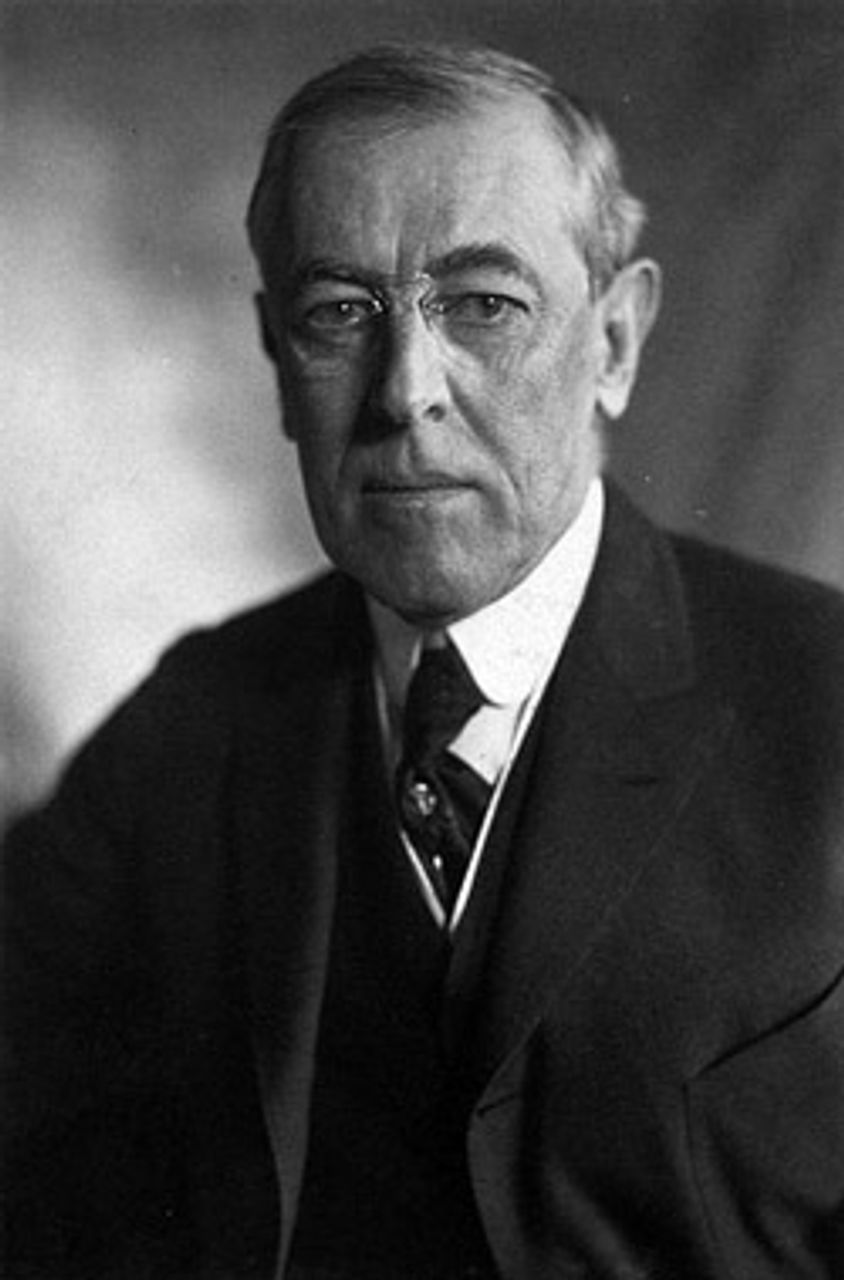
Woodrow Wilson

The challenge facing the Woodrow Wilson administration was selling its imperialist agenda to the general public. As historian Howard Zinn has noted, widespread popular hostility to the military action proved momentarily beneficial to left-wing elements in the socialist movement in the US who staged well-attended anti-war rallies and achieved some successes in municipal elections as a result of their opposition. But the war ultimately divided American socialists just as it did European socialists. In his 1938 affidavit for the Dies Committee (later the House Committee on Un-American Activities), for example, socialist author Upton Sinclair (producer of Sergei Eisenstein’s uncompleted¡Que Viva Mexico!) stated he resigned from the Socialist Party in 1917 in order to declare his support for the government’s entry into World War I. [1]

Asserting the most pious and democratic motives for its military intervention was the only way the US government could garner public support for the war. The tremendous wealth, resources and economic potential still possessed by American capitalism made it possible for Wilson’s Democratic administration to preach magnanimity towards those suffering overseas. Most conveniently for Wilson, the country had in place a ready-made propaganda machine: the American film industry. What occurred during 1917-1918 (the period of US intervention) was an aggressive pro-war, film-driven public relations campaign unlike any yet undertaken. The end result was a triumph for US (and Hollywood) capitalism and a tragedy for humanity, as 320,000 American casualties were added to millions of fresh corpses around the globe.
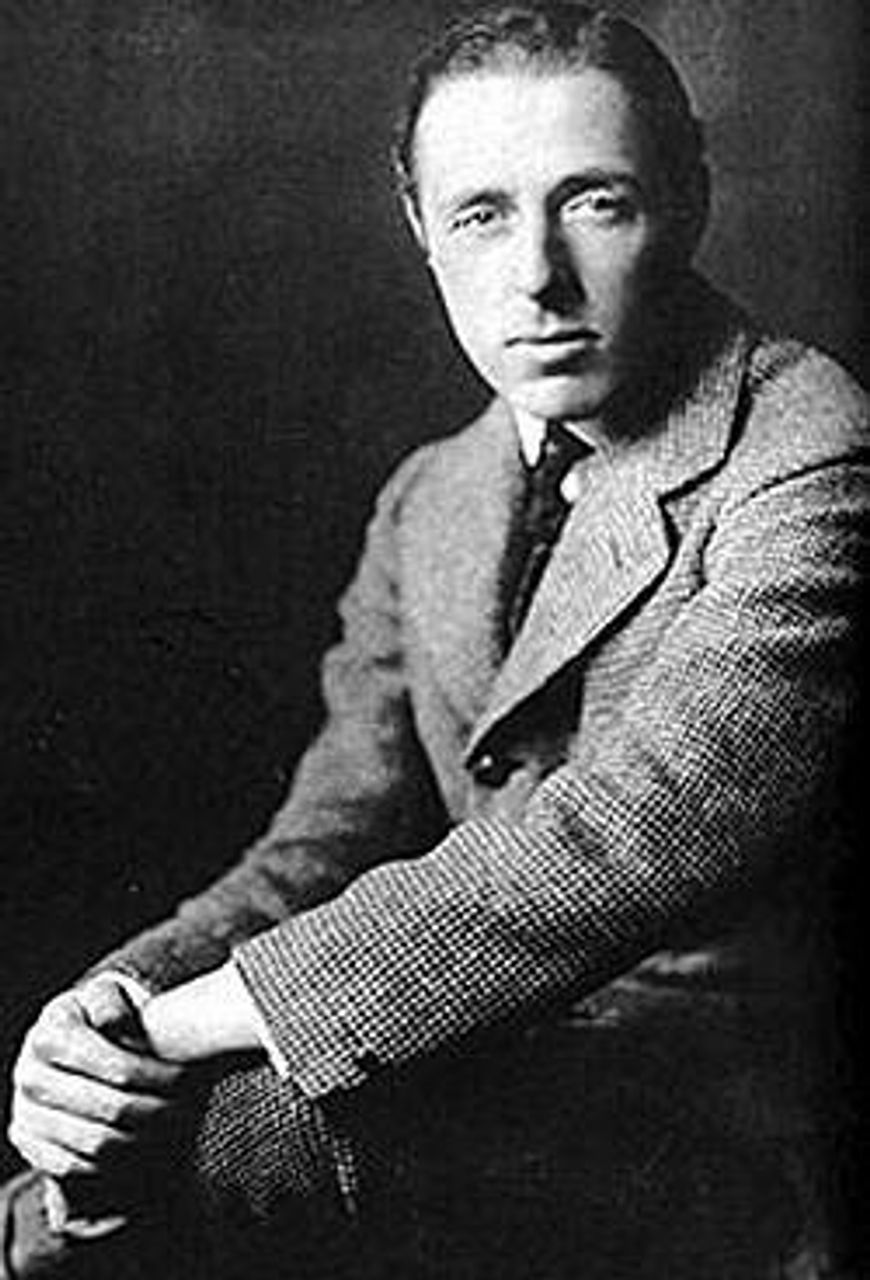
D.W. Griffith

At the time of the US entry into World War I, Paramount, Fox, Universal, Vitagraph (the basis for Warner Bros.) and the studios of Metro and Goldwyn (the nucleus of MGM) were already in full swing. Each company had one or more production plants, rosters of popular actors, actresses and creative personnel under contract and massive publicity/advertising/distribution apparatuses. Remarkably, artistic expression was not stifled under such conditions. Striking, lyrical achievements were in fact commonplace during the 1910s. This was the era of D.W. Griffith’sIntolerance and Lois Weber’s The Hypocrites (both 1916). It was the era of star/director Charlie Chaplin dissecting poverty and the class system in his brilliant 1917 comedy shorts Easy Street and The Immigrant. It was the decade that launched the remarkable careers of John Ford, Frank Borzage and Raoul Walsh. In the 1910s, it was still possible to make a studio film without too much front office interference.
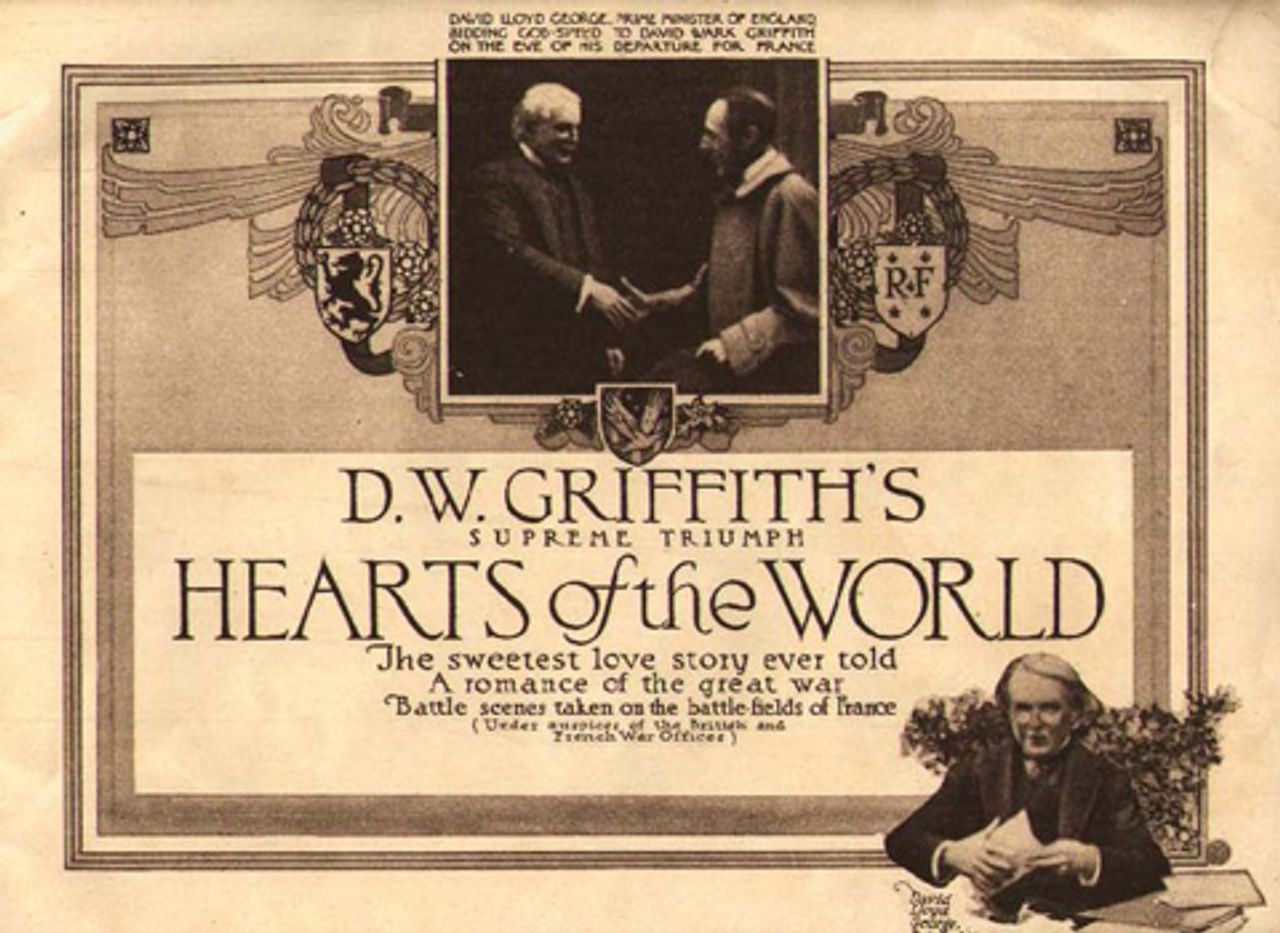
Hearts of the World (D.W. Griffith)

That the director of the pacifist Intolerance could turn around and make the pro-war Hearts of the World two years later illustrates the political and economic pressures facing US filmmakers and their corporate subsidizers after 1916. During the first three years of World War I, the US film industry suffered losses by the closing off of certain European territories, war shortages, regulations and war-related disasters. Shrewd studio leaders understood the long-term value of the war. Unlike European film companies, the US studios enjoyed an unimpaired home market and predicted a decline in film imports as a result of the war. As German, Italian and British film production plummeted, Hollywood envisioned its own world market for the first time. [2]
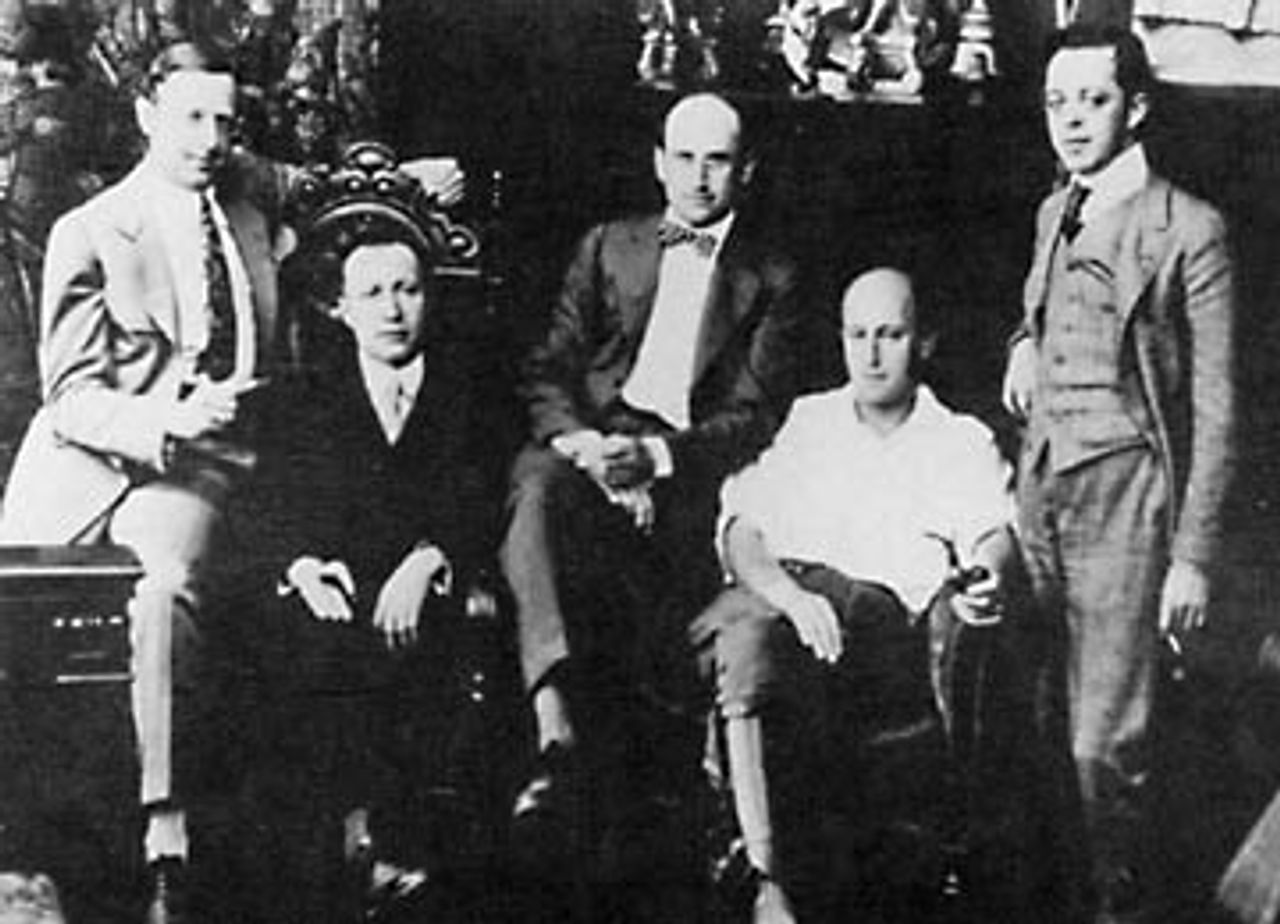
1916 publicity photo for the takeover of Paramount Pictures.
(L to R) Jesse L. Lasky, Adolph Zukor, Samuel Goldwyn, Cecil B.
DeMille, Al Kaufman

The first significant alliance between the US movie business and Washington, DC occurred on 27 January 1916 in New York City when President Wilson greeted a Motion Picture Board of Trade banquet audience of nearly 1,000 people. The guest list included such industry luminaries as Kodak’s George Eastman, Paramount’s Adolph Zukor and Samuel Goldfish (later Goldwyn). Toastmaster J. Stuart Blackton of Vitagraph spoke of the need for military preparation to protect US territories and recited a pro-war poem whose final words were “So fire your forges and dam the bills/For the wings of peace must have iron quills.” When Wilson addressed the audience that night, he kept his remarks limited to vague statements about truth in film storytelling. In any event, the contact between industry leaders and their chief executive gave legitimacy to the youthful US motion picture trade. [3]
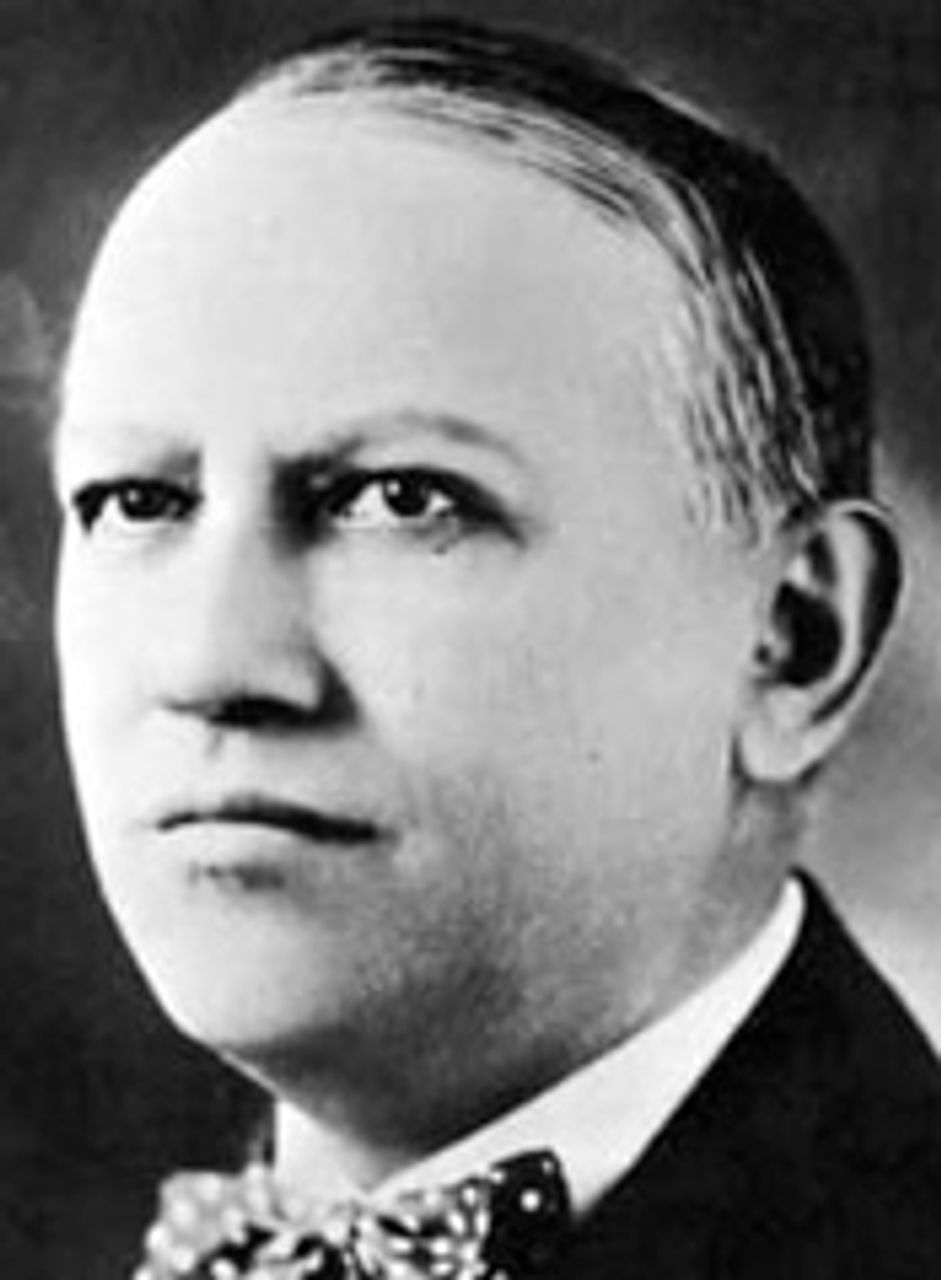
Carl Laemmle

In fairness, many of the studio chiefs felt vulnerable because they were immigrants. For the German Carl Laemmle, president of Universal Film Manufacturing Company (later Universal Pictures), these fears were justified in the fall of 1915 after several British newspapers accused Hollywood films of being backed by German capital. Laemmle moved quickly to distance himself from any German alliances by taking his lead from the Wilson administration. When neutrality was Wilson’s position in the autumn of 1914, Universal issued the two-reeler Be Neutral. When Wilson stressed preparedness, Universal offered the xenophobic 40-reel serial Liberty. In June 1916, the studio held a preparedness parade and in September of that year distributed the Lon Chaney-Dorothy Phillips war feature If My Country Should Call. [4]

Immediately after President Wilson declared war on Germany on April 6, 1917, Universal announced Universal Preparedness Productions, whose offerings included serials, shorts and features with such titles as Uncle Sam at Work, The War Waif, The Birth of Patriotism and Uncle Sam’s Gun Shops.The studio scored additional propaganda points by releasing Rupert Julian’sThe Kaiser, The Beast of Berlin (1918) and a satire, The Geezer of Berlin(1918). The anti-Kaiser propaganda apparently did its job well. In Davenport, Iowa, a public screening of The Beast of Berlin was interrupted when a man yelled and rushed down the aisle of the theater with a gun, firing two shots at the screen. [5]

In the fall of 1917, Universal signed its first government contract to produce official state films, starting with the US Department of Agriculture. During the summer of 1918, Laemmle’s studio produced a series of one-reelers on The Wonders of Our War Work, each of which bore “the official sanction and authority of the Committee on Public Information.” Universal lobbied newspaper support for the motion picture industry’s war activities to counteract “misguided zealots” singling out the film business as being expendable during wartime.

Universal’s Jewel production label also capitalized on the jingoistic atmosphere by filming the popular Henry Irving Dodge story The Yellow Dogand launching a “win the war” campaign in connection with chambers of commerce and various nationalistic organizations. All these pictures were still not enough for the US government. In the fall of 1918, the Department of Justice detained a shipment of Universal films to Brazil, accusing the Brazilian branch manager of “pro-Germanism” and demanding his removal (it is not known whether Universal complied). [6] With all this in mind, it is impossible not to wonder whether Laemmle’s eventual support for Lewis Milestone’s anti-war masterwork All Quiet on the Western Front (released by Universal in 1930) was not an unconscious attempt to offset some of his studio’s World War I activities.

Laemmle was only one of many moguls reaching out to the government. In early 1917, executives from Vitagraph, Famous Players-Lasky (Paramount’s official name at the time), Mutual, Fox and several trade magazines, joined Universal in sending President Wilson a telegram pledging “combined support for the defense of our country and its interests.” Reminding Wilson of Hollywood’s ability to influence the opinions of its daily 12 million US cinema patrons, the signers offered to form a commission “to place the motion picture at your service in the most intelligent and useful manner.” In July of that year, Wilson appointed William A. Brady of World Film to head the National Association of the Motion Picture Industry (NAMPI), an organization allied with the government’s Committee on Public Information. Brady assured Wilson of “the undivided conscientious and patriotic support of the entire [film] industry in America. I have the honor to be your obedient servant.” [7]

And obedient Brady and his studio colleagues were throughout the duration of US involvement in the war. “Propaganda” soon became the industry rallying cry. As the US laid battle plans, Variety reported that film companies “dealing entirely with Uncle Sam’s preparations for war” were elated over the fact that the government was planning to review films “suitable to promoting the proper propaganda” for army and navy recruiting.

Distributor Louis B. Mayer (the future head of MGM) had full charge of NAMPI’s New England war campaign and told Boston theater owners that motion pictures were “the great intermediary between the public and the government of Washington.” Widespread exhibition of films, said Mayer, provided “invaluable aid to the government and its various propagandas.” At the first rally of the Motion Picture War Relief Association in Los Angeles in May 1918, Paramount/Lasky director Cecil B. De Mille told the crowd of 2,000 that “The motion picture is the most powerful propaganda and sends a message through the camera which can’t be changed by any crafty diplomat.” [8] (This kind of comment, it should be noted in passing, gives the lie to the argument that the post-revolutionary Soviet government invented film propaganda.)

In August 1917, NAMPI assigned influential film people to government branches. Stars Mary Pickford and Anita Stewart were both appointed to the Women’s Defense Committee. Adolph Zukor and theater magnate Marcus Loew were dispatched to the Treasury Department. Exhibitor Samuel (“Roxy”) Rothapfel and the president of Metro Pictures were sent to the Department of the Interior. Mayer went to the United States Shipping Board. William Fox, Jesse Lasky, Edwin S. Porter (director of The Great Train Robbery in 1903) and Lasky star Douglas Fairbanks divided up between the East and West Coast branches of the American Red Cross. [9]

Personal appearances by stars were essential in promoting the war. In December 1917, the Canadian-born Pickford took a break in San Francisco location filming of Amarillo of Clothesline Alley to lead a Marine Corps band down Market Street, “clad in a skirted variation of a marine corps uniform.” In July 1918, the Motion Picture War Relief Association staged a parade in Los Angeles with Fairbanks as grand marshal leading 200 mounted aides. Universal director Lois Weber (Griffith’s commercial equal at the time) marshaled the women’s division of this parade that included thousands of marching men and 47 bands. Film stars Pickford, Chaplin and Fairbanks jointly addressed huge crowds in Manhattan to sell Liberty war bonds and subsequently toured the country individually. For “Liberty Day” in New York City on October 12, 1918, Zukor arranged for a traveling theater to appear on major street corners with stars from his Manhattan and Fort Lee, New Jersey film studios promoting war bonds with “a host of pretty bond sellers.” [10]

Personal appearances aside, nothing advertised government war bonds better than motion pictures. NAMPI arranged for prominent studios to produce short propaganda films touting so-called “Liberty Loans.” The Second Liberty Loan drive in the fall of 1917 was pushed by five movies featuring “leading stars and personages of stage and screen.” For the Third Liberty Loan campaign, Douglas Fairbanks starred in the short Swat the Kaiser. For the Fourth Liberty Loan drive, NAMPI chairman Zukor appeased the Treasury department by arranging for the production of 40 Liberty Loan Specials from 12 film companies and 37 stars. Among these were 100% American with Mary Pickford, Sic ‘Em, Sam with Fairbanks, The Taming of the Kaiser Bull starring Mae Murray, and Charlie Chaplin in The Bond. Hard sell pitches also came from actress Lillian Gish (dreaming of invading Germans) and comic Roscoe Arbuckle (confronting the Kaiser in Berlin). President Wilson was impressed enough by these Hollywood propaganda actions to sing the industry’s praises at the National Press Club in Washington. Several Liberty Loan films were subsequently screened in the rotunda of the US Capitol for senators, their wives and Senate employees. [11]
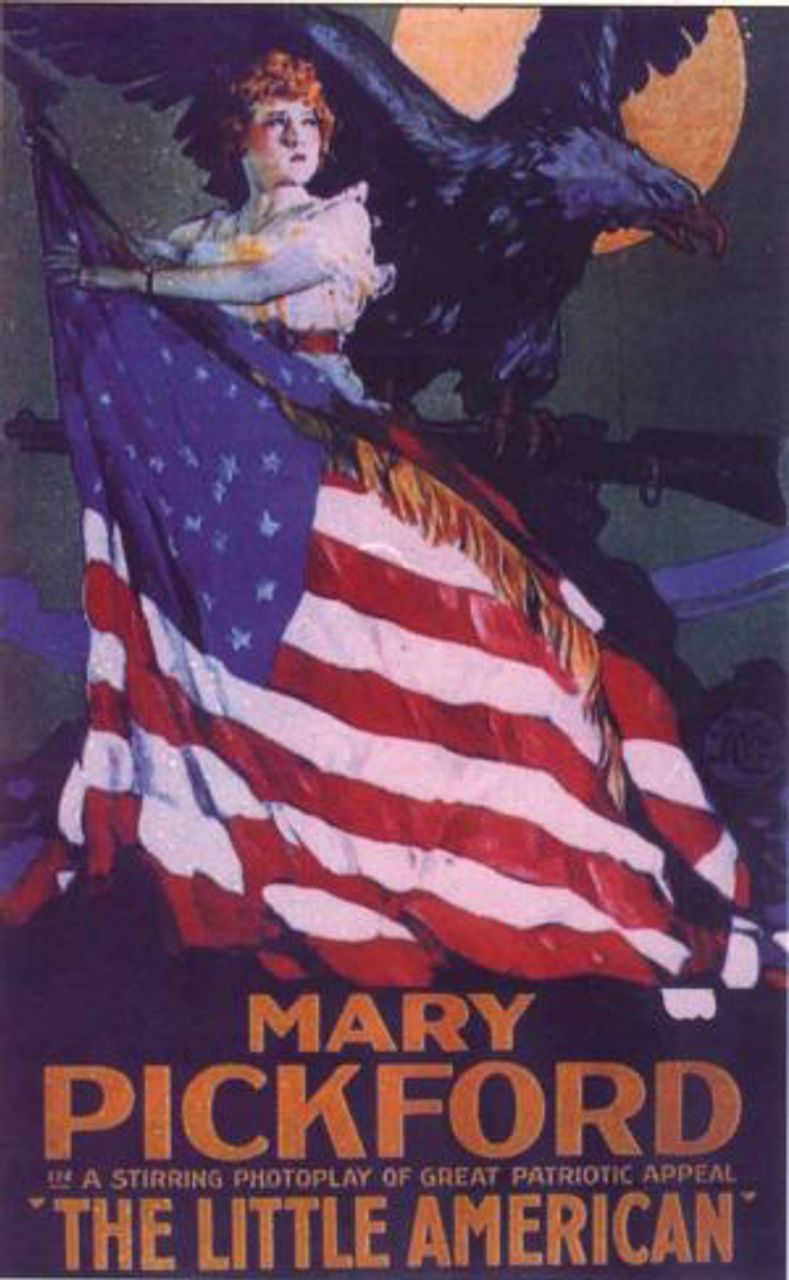

Political film censorship was rampant during this time. In cities with German-American populations, even pro-war movies were targeted. De Mille’s The Little American, starring Pickford, was initially banned in Chicago for its negative portrayals of German soldiers. Most censoring, however, occurred when films did not toe the official government line. In Pennsylvania, the state attorney general threatened to revoke licenses for cinemas exhibiting films that could endanger enlistment. Similar measures were discussed in New York State. In Maryland, the governor arranged with the state censor board to recall previously approved films containing any mildly anti-war sentiments or grim scenes of battlefield carnage. The Evening Sun of Baltimore praised actions to ban “maudlin pacifist and exaggerated pictures” of war. In an unusual statement, the paper went so far as to proclaim, “Any attempts to undermine and discredit the Government now are far more harmful than the sight of some lady with too abbreviated drapery capering on the screen.” [12]

This intense censorship climate was exacerbated by Wilson’s signing of the Espionage Act in June 1917, which attacked any forms of speech construed as critical of the war. Under such conditions, several film figures were arrested. French citizen Frank J. Godsell was taken into custody by the US government for showing “pro-German” films of “German militarism as an exalted institution,” according to Variety. Despite Godsell having changed the intertitles (cinema was still a silent technology in the 1910s) of the original version to downplay German propaganda; and despite his picture having screened at the National Press Club in Washington, the New York attorney general’s office seized the film. [13]

The most infamous and telling World War I film censorship case was the banning of the independent Revolutionary War picture The Spirit of ’76. Produced by Robert Goldstein (an original investor in Griffith’s 1915 pro-slavery blockbuster The Birth of a Nation), the feature became the center of government attacks after being suppressed by Chicago censors in May 1917, just a month prior to the signing of the Espionage Act. Although Goldstein regained control of the film for Los Angeles, Spirit of ’76 was soon confiscated by the Department of Justice and its producer charged with espionage. The film was deemed a threat to the British war effort due to hostile portrayals of England during the Revolutionary War, despite the overall jingoistic pro-US message. In May 1918, a shocked Goldstein received a 10-year prison sentence and a $5,000 fine (he eventually obtained an early release). [14]

Taking aim at businesses and individuals who demonstrated any “pro-German” sensibilities was part and parcel of the mood established by the Wilson administration. In late 1917, an executive at the Associated Motion Picture Advertisers introduced a resolution discouraging film companies from advertising in newspapers supportive of Germany. Half a year later, William Fox, the Hungarian cinema magnate who ran Fox Film Corp., threatened to fire any Fox employee who was not “100 percent American.” Branch managers were instructed to submit confidential reports “as to anybody whom they even suspected of not being true Americans,” stated a trade account. “These reports, Mr. Fox announced, would be thoroughly investigated, and if any employee in the Fox forces should be found to be even slightly pro-German he would be dismissed.” [15]

Such actions disturbingly foreshadow the firing and blacklisting of leftist and liberal film employees during the late 1940s and 1950s when HUAC carried out its Cold War Hollywood attacks.
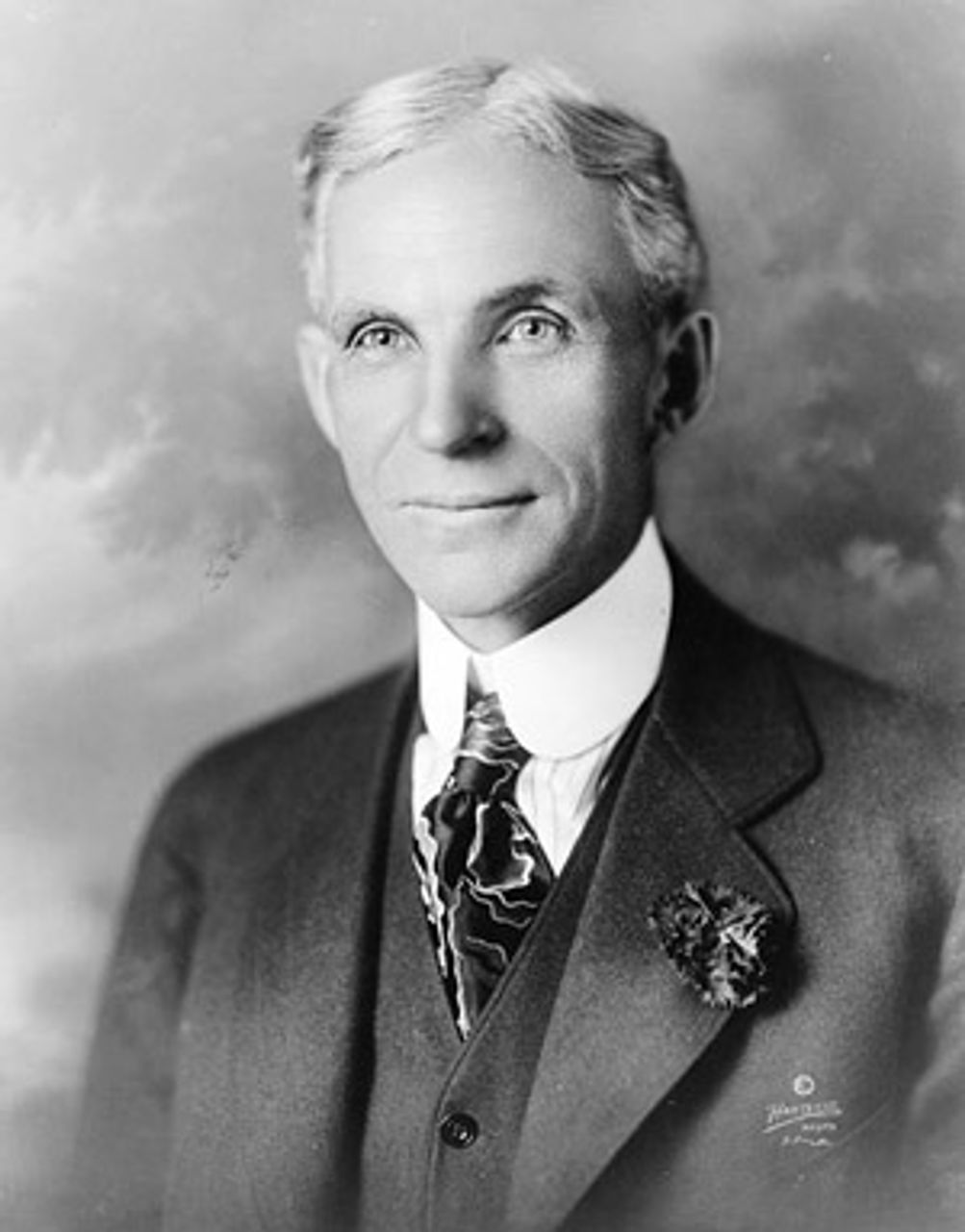
Henry Ford

The US government did permit political dissent of a certain type to reach cinema screens. Henry Ford, auto magnate, virulent anti-Semite and isolationist, opposed the outbreak of war for the damage he thought it would do his business operations (he later became a firm supporter of American intervention). Right up until the time the US officially declared war, it was still possible for Universal newsreel cameramen to accompany Ford’s “Peace Pilgrims” to Europe. At the dawn of 1916, the French-owned Pathé Exchange even distributed an anti-war three-reeler called The Horrors of War, which future war profiteer Ford publicly endorsed. One very short and momentous year later, no US film producer would have dared issue such a picture to theaters for fear of political reprisals. Pro-war studio-distributed newsreels and government films soon replaced the “horrors of war” documentary. [16]
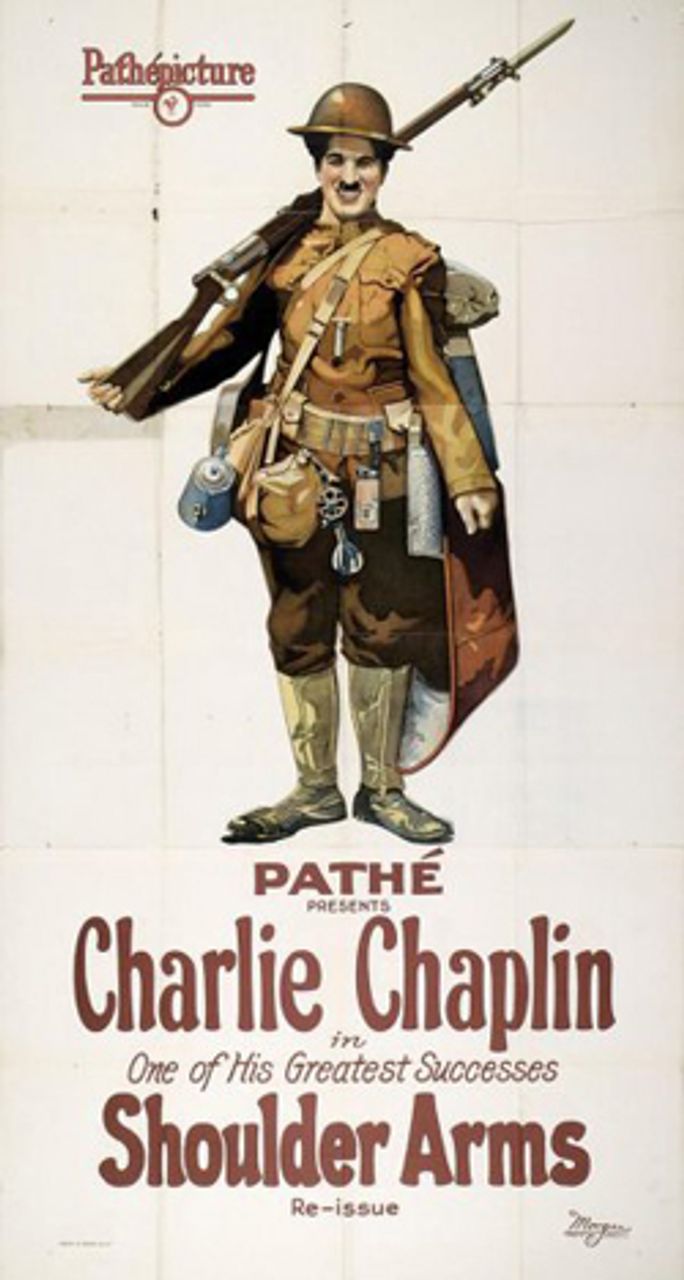

In a similar vein, Liberty Loan public and film appearances did not dissuade Charlie Chaplin from making his satirical Shoulder Arms, released shortly before the 1918 Armistice. The increasingly inflamed atmosphere of “anti-red” paranoia also failed to dissuade Triangle Film Corp. from presenting a feature sympathetic to socialism called The Answer (1918)—five months after the Russian Revolution. These, however, were exceptions in an intensely reactionary atmosphere.

The beleaguered public of the World War I years could not be fooled for long. As soon as the war came to an end, the pro-war cult collapsed. Hollywood writers and directors were equally scarred by the impact of the devastating war and responded with artistic rage. Only 27 months after the Armistice, Metro Pictures released Rex Ingram’s harrowing masterpieceThe Four Horsemen of the Apocalypse (1921). That such a downbeat pacifist drama could go on to become a huge success is a testament to public backlash against the government’s 1917-1918 propaganda campaign. Hostility towards the war continued through the Great Depression years and studios responded with such remarkable anti-war dramas as King Vidor’s The Big Parade (MGM 1925) and Milestone’s All Quiet on the Western Front.

This all too brief period of humanistic reflection on imperialist warfare regrettably gave way to more intense rounds of Hollywood’s political capitulation. There was a high price to pay for such capitulation. Film industry support for US government actions during World War II surpassed anything Hollywood had done during 1917 and 1918. After that war ended in 1945, the government showed its gratitude by carrying out, with studio cooperation, “anticommunist” purges from which US filmmaking has yet to recover.

Film is a powerful medium, but nowhere in the world is it so much a private preserve of commercial interests as in the US. As the social crisis develops and the working class comes forward, these interests will once again fiercely exert their social priorities and demands. In both world wars, the Depression and the witch-hunt era, the studio heads demonstrated their devotion to US capitalism.

At the same time, of course, there are countless writers, actors, directors and even producers who are critical of American society and who could be won to opposing it. A knowledge of this history is vital to them, too.

Notes:

[1] Zinn, Howard, A People’s History of the United States (Harper & Row, 1980), pp. 355-56. Bentley, Eric, editor, Thirty Years of Treason: Excerpts from Hearings Before the House Committee on Un-American Activities, 1938-1968 (New York: Thunder’s Mouth Press/Nation Books, 1971, 2002), p. 48.

[2] “The War’s Effect on the Movies,” The Billboard (19 December 1914), p. 153.

[3] Bush, W. Stephen, “Motion Picture Men Greet President,” Moving Picture World (12 February 1916), pps. 923+. “First Board of Trade Banquet, Attended by President Wilson, Marks New Era in Industry,” Motion Picture News (12 February 1916), pp. 817-18.

[4] Variety (20 August 1915), p. 17. “Universal Backs Wilson on Neutrality”,Motion Picture News (19 September 1914), p. 57. The Billboard (19 September 1914), p. 46. Moving Picture World (22 July 1916), p. 644. Motion Picture News (12 August 1916), p. 927. Universal advertisement, ibid, pp. 928-29. Moving Picture World (9 September 1916), p. 1629.

[5] Universal advertisement, Moving Picture World (5 May 1917), p. 706. Ibid, p. 810. Universal advertisement, ibid, p. 820. Moving Picture World (3 August 1918), p. 703. “Shot ‘Beast of Berlin,’” Variety (12 April 1918), p. 47.

[6] “Universal Gets Government Contract,” Moving Picture World (15 September 1917), p. 1774. “Universal Puts Out Stirring Training Film,”Moving Picture World (4 May 1918). “Universal to Make Films for Government,” Moving Picture World (22 June 1918), p. 1724. “Universal Appeals to Newspapers,” Moving Picture World (29 June 1918), p. 1850. “Roosevelt Backs Anti-Yellow Dogism,” Moving Picture World (17 August 1918), p. 992. “Jewel’s Anti-Yellow Dog Campaign Is Spreading Fast,”Moving Picture World (24 August 1918), p. 1137. Variety (13 September 1918), p. 49. Variety (20 September 1918), p. 49.

[7] “President Wilson Offered Aid of Film Men,” Motion Picture News (24 February 1917), p. 1197. “President Wilson Calls Upon Film Industry,”Moving Picture World (14 July 1917), p. 217.

[8] “Gov’t to Look at Films,” Variety (4 May 1917), p. 16. “War Work Under Way in Boston,” Moving Picture World (1 September 1917), p. 1350. “Industry in West to Black the Government,” Moving Picture World (15 June 1918), pp. 1549-50.

[9] “Motion Pictures Mobilized for War,” Moving Picture World (11 August 1917), p. 918.

[10] “Mary Pickford Leads Parade,” Moving Picture World (5 January 1918), p. 127.

Variety (16 August 1918), p. 40. “Industry in West to Black the Government,”Moving Picture World (15 June 1918), pp. 1549-50. “Industry to Back Liberty Loan,” Moving Picture World (9 June 1917), p. 1617. “Industry’s Drive Under Full Speed,” Moving Picture World (19 October 1918), p. 352. “Motion Picture Industry Boosting Bond Sale,” Moving Picture World (4 May 1918), pp. 672-74. “Public Responds to Players’ Appeals,” Moving Picture World (18 May 1918), p. 972.

[11] NAMPI advertisement, Variety (12 October 1917), pps. 36-37. “Five Hundred Prints for Liberty Film,” Moving Picture World (13 October 1917), p. 209. “Zukor Committee Announces Plan for Loan Drive,” Moving Picture World (3 August 1918), p. 665. “Liberty Loan Distribution Arranged for Special Films,” Variety (30 August 1918), p. 41. “Synopses of Liberty Loan Specials,” Moving Picture World (5 October 1918), p. 122. “Great Array of Star Films to Boom Liberty Loan Drive,” Variety (20 September 1918), p. 49. “Fifty Stars Contribute to Loan,” Moving Picture World (7 September 1918), p. 1407. “Industry’s Drive Under Full Speed,” Moving Picture World (19 October 1918), pp. 351-52. NAMPI advertisement, Variety (27 September 1918), pp. 44-45.

[12] “That Chicago Censor,” Variety (6 July 1917), p. 17. “Bans All Films That Discourage Enlisting,” Moving Picture World (5 May 1917), p. 832. “Shall Horrors of War in Film be Banned?” Moving Picture World (5 May 1917), p. 834. “Maryland Censors Recall Certain War Films,” Moving Picture World (12 May 1917), p. 997.

[13] “Juggling Propaganda,” Variety (22 March 1918), p. 57.

[14] AFI Catalogue of Motion Pictures Produced in the United States; Feature Films, 1911-1920 (Berkeley/Los Angeles/London: University of California Press, 1988), p. 875.

[15] “Pro-German Papers Cut Off,” Variety (2 November 1917), p. 53. “William Fox Will Dismiss Pro-Germans,” Moving Picture World (29 June 1918), p. 1859. “What William Fox Is Doing to Help Win the War,” Moving Picture World (21 September 1918), p. 1745. “How Fox Organized the War Drive,” Moving Picture World (30 November 1918), pp. 923-24.

[16] Moving Picture World (26 February 1916), p. 1273. Pathé advertisement,Moving Picture World (8 January 1916), pps. 192-193, quoting Ford in 3 December 1915 New York Journal. “Patriotism Pervades Hearst-Pathe News,” Moving Picture World (17 April 1917), p. 2921. “Triangle to Distribute ‘Booster’ Picture,” Moving Picture World 27 (October 1917), p. 509.

Crisis & Commitment: 150 Years of Service by Los Angeles County Public Hospitals

LOS ANGELES COUNTY hospitals are among the nation’s notable public health achievements. More than 150 years after it first provided hospital care for the indigent, Los Angeles County is about to open a new hospital, replacing its 74-year-old and earthquake-damaged Los Angeles County University of Southern California Medical Center (LAC–USCMC) with a modern, although smaller, facility.
The current LAC–USCMC hospital is among the largest in the state and the centerpiece for health care in Southern California. It operates a busy trauma center and an array of primary and specialty clinics and is affiliated with the University of Southern California, which has operated a medical school there since 1885.1
Annually, the hospital receives nearly 800000 emergency and outpatient visits and more than 46000 inpatient admissions. LAC–USCMC patients, like other Los Angeles County Department of Health Services (DHS) patients, are primarily poor and uninsured. More than three quarters are living below the federal poverty level, more than 70% are Latino, two thirds are uninsured, and almost two thirds were born outside of the United States.2
The hospital’s public role goes beyond serving as a safety net for the poor. It has trained thousands of physicians, nurses, and other health professionals. It provides one third of all trauma care in the county and has been the site of many significant scientific contributions in clinical medicine and surgery. The hospital has even been used as a visual backdrop for a popular daytime television drama. Yet, from its earliest days, it has been in the forefront of real-life controversy and political drama, as the County of Los Angeles has struggled to keep its health care system afloat.4
The Los Angeles County story is more than the history of a single hospital; it is indeed a chronicle of a community’s complex and contentious struggle to shoulder the burden of health care for its indigent and uninsured population. Other communities have similarly struggled to protect their public health and hospital systems, which reflect the historical role of public hospitals in confronting local problems associated with poverty, immigration, and lack of access to health care.5
The Los Angeles County hospital system was built under changing and sometimes conflicting social policies governing both public health and welfare for the poor. Although public health laws contributed to the evolution of the DHS, the Los Angeles County hospital emerged largely from the county’s responsibility to provide for the health and welfare of its indigent population. The Pauper Act of 1855, adopted shortly after California achieved statehood, evolved to become Section 17000 of the state Welfare and Institutions Code. Passed in 1935, Section 17000 delegated the health and welfare responsibilities of the indigent to the counties.6 Counties appropriated a portion of their tax base to health care, and by 1966, 66 public hospitals were distributed across all but 9 of the 58 counties.7
Los Angeles County’s health care system began in 1856, when 6 Daughters of Charity of St Vincent DePaul traveled to Los Angeles from Emmitsburg, Md, to open a hospital.8 Their 8-bed facility later became St Vincent’s Hospital, from which the county purchased medical services for indigent patients at a cost of $1.22 a day. It was not long before the cost of caring for the indigent became an issue in Los Angeles, and in 1878, the county opened its own 100-bed Los Angeles County Hospital and Poor Farm as a way of lowering costs to the county.9
Go to:

BALANCING PUBLIC HEALTH AND INDIGENT CARE

Until 1915 public health activities and administration were centered primarily in the city of Los Angeles, which had operated a health department since 1879. The city’s first health officer, Walter Lindley, used his office to attract health seekers, individuals who might be lured to Southern California by its warm climate and lifestyle.10 Families from the East Coast and Midwest came to Southern California, and the population surged. The growing economy also attracted immigrants from Asia and Mexico, who came to Los Angeles searching for employment opportunities.11 New communities of immigrants formed outside the city limits of Los Angeles. High rates of infant mortality and infectious disease were reported in the media and discussed by both city and county officials. Residents’ fears of communicable disease grew as the number of immigrant families in the area grew, introducing a new dimension to the struggle to expand, and later protect, the Los Angeles County hospital system.
The Los Angeles County General Hospital played important roles in the treatment and control of infectious diseases.12 Many communicable-disease patients were treated at the facility. During an outbreak of plague in 1924, it was county hospital pathologist George Manor who identified the deadly bacterium in a county hospital patient.13 But during this period, the county hospital could do little to prevent the spread of infectious disease in the county or even respond to the demand for patient care in the outlying regions of Los Angeles. In 1915, the Los Angeles County Public Health Department, which had jurisdiction over smaller cities and unincorporated regions, appointed John Larabee Pomeroy, who, as the county’s first health officer, confronted high infectious-disease rates among immigrant families.14 Pomeroy developed a series of 12 free health clinics strategically placed throughout the county that would provide a new front against communicable diseases and alleviate some of the patient care demands at the county hospital.15 However, throughout the early years of the depression, private physicians in the county opposed these clinics, fearing they would draw paying patients away from their offices. Under this pressure they were closed by the county’s Board of Supervisors.16 Poor and immigrant families in Los Angeles had little access to private health care, however, and with the growing concern that immigrants would spread infectious diseases to others, physicians eventually dropped their opposition, facilitating the expansion of public health clinics in the 1940s and 1950s.
An external file that holds a picture, illustration, etc.
Object name is 091637_cousineau_Image1.jpg
An advertisement announcing the opening of the Los Angeles County Hospital.
Source. Southern Vineyard, no. 11, June 5, 1958. Reproduced with permission from the Henry E. Huntington Library and Art Gallery.
The growing rates of infectious diseases contributed to Los Angeles County’s decision to build a new facility in the 1920s. Infectious diseases even influenced the design of the new facility, with its vertical stacks of wards separated by stairwells and elevators to reduce the flow of patients, visitors, and staff, and the spread of infectious agents.
Fear of communicable diseases did not ease the concerns of taxpayers, who were wary of the cost of building the new hospital. An initial bond measure failed and a second narrowly passed in 1923, authorizing a $5 million bond, later augmented by a 10-cent property tax surcharge, to acquire the land and construct the hospital. The hospital’s 8-ton cornerstone was dedicated by actress Mary Pickford on December 7, 1930, and the 1680-bed Los Angeles County General Hospital opened in December 1933. Its size was 1 million square feet, and its cost was $12 million. Before the formal dedication of the hospital, the Los Angeles Evening Herald wrote on March 12, 1934, “Cream-white in the noonday sun—gold tinted in the afternoon haze, looming black against the stars at night—the Los Angeles County General Hospital rounds a hilltop with its soaring mass of concrete, the greatest single monument to that command ‘Heal the sick’ ever erected by an American community.”17(p112)
Go to:

HEALTH AND DEMOGRAPHIC CHANGES

As infectious diseases subsided, many of the LAC–USCMC campus facilities and ancillary hospitals built to treat infectious disease were converted to provide general acute care or even specialty care. Several miles south of LAC–USCMC, Rancho Los Amigos was started in 1890 as a poor farm (county-run residences where paupers were supported at public expense) and became an internationally recognized rehabilitation institute, but only after the poliomyelitis epidemic pressed it into service as a respiratory center. Changes in types of health problems facing Los Angeles were not the only factors affecting change in public hospitals. Facilities were added or expanded in response to changing demographic and social forces and events. In 1942, the capacity of the county hospital was expanded to nearly 3800 beds to accommodate injured military personnel returning from World War II. At the end of the war, the county acquired 2 military hospitals: Harbor General Hospital in Torrance (now Los Angeles County/Harbor UCLA Medical Center) and a hospital in Long Beach, which was later closed. A 265-bed psychiatric hospital was built next to the General Hospital in 1955 in part as a response to the closures of state psychiatric hospitals. New educational institutions became part of the Los Angeles County Hospital, including the College of Medical Evangelists, which later moved to Loma Linda University, and the California College of Medicine, which moved to become the University of California, Irvine School of Medicine.
Postwar population growth in Los Angeles County and suburbanization had a profound impact on Los Angeles and its health care system. Up to this time, the General Hospital served not only the poor but also some of the middle-income working class who lived in central and east Los Angeles. These communities were thriving, with industries, jobs, and neighborhoods with single-family dwellings. During the postwar population surge of the 1950s, industries, jobs, and money followed the mostly White families to the growing suburban communities. The previously prospering central and east Los Angeles communities became home to a growing number of low-income families who were predominantly Black and Latino.
As employment-related, private health insurance expanded and private hospitals were built to serve growing middle-class suburban communities, health care for the poor became the prominent domain of the Los Angeles County General Hospital. By the 1960s, the hospital had become a medical complex that included the General Hospital, the Pediatric Pavilion, the Psychiatric Hospital, and the Women’s and Children’s Hospital. It was renamed the Los Angeles County University of Southern California Medical Center.
The social and economic neglect of south-central Los Angeles, capped by police racism, culminated in urban unrest and the Watts riots of 1965, a seminal point in the history of Los Angeles. An independent commission’s report on the causes of the Watts riots identified the lack of health care in south-central Los Angeles and led to the building of the Martin Luther King Jr Medical Center and the Charles R. Drew Postgraduate Medical School (later to become the Charles R. Drew University of Medicine and Science), both opening in 1972.18
As public hospitals in Los Angeles expanded medical services to the poor, core public health activities remained a separate entity. However, the lines between indigent health care and public health began to blur in the 1960s with the merger of the Los Angeles City Health Department into the County Health Department.19 In 1972, in further efforts to consolidate and integrate county services, the county departments of hospitals, public health, and mental health and the County Veterinarian’s Office were merged into the DHS. Integration promised a rational system of health planning whereby the deployment of health services would be based on demographic data or health status. But this approach was overcome by the increasingly political nature of the county health care system. Individual supervisors focused on problems in their own jurisdictions rather than in the larger system. Regional planning was increasingly organized according to the district boundaries of the 5-member County Board of Supervisors.20
Go to:

COUNTY SUPPORT SHIFTS TO THE STATE AND FEDERAL GOVERNMENTS

County politics governed public health care through the 1950s. Patient fees made up a sizeable portion of the revenue for the Los Angeles County Hospital, although they were augmented with operating subsidies from the county. As new medical technology was added, hospital costs increased significantly and per diem costs (including physicians’ services) grew from about $4 per day in 1937 to $450 per day in 1978.21 Although other jurisdictions closed or sold their hospitals, Los Angeles turned to higher levels of government for help, beginning a shift from a largely county-financed system of care to one with significant participation from the state and federal governments.
This shift began in 1965 with the passage of Title XVIII and Title XIX of the Social Security Act, which created Medicare and Medicaid. These programs promised better access to private or mainstream medical care for the elderly and the poor. It was also hoped that these programs would help to stabilize the increasingly cash-strapped public hospital system.21 Unfortunately, these hopes were never realized. The proportion of patients aged 65 years or older who were hospitalized in Los Angeles County hospitals declined from about 21% in 1965 to less than 6% by 1968 and now runs about 3%. The substantial revenues derived from Medicare by private sector hospitals did not help Los Angeles County hospitals.23
More hope was placed on Medicaid (called Medi-Cal in California), because it was designed specifically for the poor, who composed an increasingly large proportion of county patients. Medi-Cal compensation for hospital care was so low at first that it was not attractive to private hospitals. Over time, increases in Medi-Cal hospital reimbursement rates expanded private hospital participation, which in turn led to a steady decline in Medi-Cal admissions in Los Angeles County hospitals.
A further shift from dependence on county to state revenue was imposed by the passage of Proposition 13 in 1978, which limited property taxes to no more than 1% of assessed valuation and limited annual increases in assessed valuation to no more than 2%.24 The resulting sharp decline in property tax revenue drastically cut local government budgets, exacerbating an increasingly precarious funding platform for California’s county hospitals.24
An external file that holds a picture, illustration, etc.
Object name is 091637_cousineau_Image2.jpg
The original Los Angeles County Hospital building, 1897.
Reproduced with permission from Helen Eastman Martin
Throughout California, the success of Medi-Cal and Medicare in improving access to private care, along with Proposition 13, accelerated the closure or sale of many county hospitals. By 1985, fewer than half the counties in California operated public hospitals.26 Similar trends were noted nationally: between 1985 and 1995, the number of public hospitals in the United States declined by 14%.27 The financial problems triggering this decline in other jurisdictions similarly affected Los Angeles County. The county’s policy efforts turned increasingly to institutional survival, as its health budget was strained by dwindling revenue and an unprecedented expansion in the demand for care in its hospitals.
An external file that holds a picture, illustration, etc.
Object name is 091637_cousineau_Image3.jpg
Registering patients at the Los Angeles County Hospital Outpatient Department, circa 1920.
Reproduced with permission from Helen Eastman Martin
Beginning in 1980, Los Angeles County encountered a series of budget crises precipitated by Proposition 13. The county turned to the state, which then had a budget surplus. In response, the state developed a complex formula for returning some of the state surplus dollars to the counties.28 By increasing their financial dependence on the state, county health systems became increasingly sensitive to changes in state policy and politics. The state imposed a maintenance-of-effort provision on the counties as a condition of state support and adopted legislation requiring public hearings to show that any proposed health care reductions or closures would not deleteriously affect the health of the public.29
Yet state support for the Los Angeles County health system was anything but stable. Over the next 20 years, the state would continually modify and realign the amount it provided to Los Angeles County, the funding sources supporting state allocations, and the expectations for maintaining the most recent level of care to the indigent.30
State support declined when the California surplus turned to a deficit in the 1980s. As the state adapted to voter-imposed spending limits and identified solutions to an alarming increase in spending for health care, the governor and California legislature sought to reduce payouts to the counties. The counties argued that unless the state did more to help them pay for indigent health care, they alone could do little to keep county hospitals open.
In 1982, in an effort to both reduce state budgets and help Los Angeles County, California eliminated the optional and entirely state-financed Medically Indigent Adult eligibility category for Medi-Cal. The state returned a portion of its projected annual expenditures for this population to the counties as a block grant. As a result, hundreds of thousands of low-income residents became uninsured; many of these had chronic health and mental health problems. Los Angeles County used the money to shore up its ever-growing health care budget deficit, although the health of the indigent adult population deteriorated in the following years.31Because the state continually reduced the Medically Indigent Adult allocation, the action actually contributed to the county’s long-term problems. By the mid-1980s, the LAC–USCMC was again being challenged by unprecedented increases in demand for care, particularly in its emergency room.32
Go to:

MEDI-CAL PATIENTS AND DOLLARS SHIFT TO THE PRIVATE SECTOR

The patient care crises at the LAC–USCMC caused alarm throughout the state. Locally, a coalition of stakeholders was formed to identify new ideas for caring for the county’s indigent population, which by 1992 had grown to 2.7 million people, 31% of the nonelderly population.33 But California had its own budget problems. In 1992, in the depths of a recession, the legislature and governor claimed $3 billion statewide from property tax revenues, $1 billion of which came from Los Angeles County. The state also targeted Medi-Cal, which was assuming an increasingly large share of the state’s budget. Under DHS director Robert Gates, Los Angeles County developed unique responses and programs to minimize the effect of these changes on its health care system. However, these changes accelerated the decline in Medi-Cal patients and revenue to the county hospital system in Los Angeles.
Beginning in 1993, California moved many of its Medi-Cal recipients into managed care. MediCal patients in Los Angeles had to choose between a commercial plan, HealthNet, and a new quasi-public local initiative called LA Care Health Plan.34 For those who did not choose a plan, the state established a formula that proportionately directed beneficiaries into all contracted health plans. Fearing a wholesale loss of Medi-Cal revenue, LA Care adopted an alternative policy, directing Medi-Cal members who did not voluntarily choose a plan to the Los Angeles County health system by default, thereby guaranteeing a revenue stream to the county health system.35
Los Angeles County developed other creative fixes to its financial problems. It helped to pass 2 state laws, SB 1255 and SB 855, that set in motion the joint state and federal Disproportionate Share Hospital (DSH) program. DSH uses a complex, intergovernmental transfer of local, state, and federal funds and provides supplemental payments to both public and private hospitals that serve large numbers of Medi-Cal and uninsured patients.36 Although the DSH program was important to the county health budget, it further encouraged the shift of Medi-Cal patients and revenue to the private sector, which was more than willing to take patients who brought the DSH supplement but less able or willing to serve the uninsured. By 2000, indigent or uninsured patients used more than 35% of county inpatient days, compared with fewer than 5% in private Disproportionate Share Hospitals.37
The county’s effort to protect its hospitals occasionally overlapped with its efforts to respond to public health problems. In the early 1990s, a spiraling birth rate caused overcrowding in both public and private hospitals. In response, the state expanded Medi-Cal and developed other programs for pregnant women. To ease overcrowding and facilitate access, Los Angeles County developed its own program, which immediately presumed all pregnant women were eligible for Medi-Cal and guaranteed payments to hospitals for deliveries even before a woman had been enrolled. Private hospitals now openly competed for Medi-Cal patients. This improved access for obstetrical care for lower-income women and helped relieve overcrowding in obstetrical units, but it did little to help the county hospitals financially. The percentage of Medi-Cal births in Los Angeles County hospitals plummeted. In 1985, more than half of all Medi-Cal births in the county were at county hospitals, but this dropped to fewer than 10% by 2000, while private hospitals’ share of Medi-Cal births soared to more than 90% (Figure 1▶).
Go to:

THE NEAR COLLAPSE OF THE COUNTY HEALTH CARE SYSTEM

By 1994, a perfect storm was brewing. The county’s $2.5 billion health budget had become unstable, and Los Angeles County hospitals increasingly found themselves alone in serving the growing number of indigent and uninsured patients, which set the stage for the now-notorious 1995 health care crisis. One third of the department’s total revenue was at risk, threatening the financial solvency of the entire County of Los Angeles. With declining Medi-Cal dollars, the county health care budget remained dependent on state and federal revenue, which was leveraged by what few dollars Los Angeles County contributed. Moreover, the DSH program tied the solvency of many urban private hospitals to county financing. Los Angeles County found it could do little to solve this problem on its own. Under Proposition 13, the county could not raise taxes without approval of two thirds of the voting public.38 Compounding the financial crisis was the growing concern about whether the county public health system had adequate capacity to manage the escalating incidence of HIV/AIDS, tuberculosis, and other dangerous infectious agents.39
The threat of county bankruptcy compelled the Board of Supervisors to consider drastic measures. In 1995, the chief administrative officer, Sally Reed, proposed closing the LAC–USCMC while keeping the other hospitals open. The board ultimately rejected this and similar ideas and instead appointed former assemblyman Burt Margolin as health crisis manager to identify alternative proposals. Margolin negotiated an 1115 Medicaid waiver (a section of the Medicaid law that allows states to propose innovations in health care coverage and delivery) with the US Health Care Financing Administration, now the Center for Medicare and Medicaid Services.40
An external file that holds a picture, illustration, etc.
Object name is 091637_cousineau_Image4.jpg
Constructing the Los Angeles General Hospital, circa 1930.
Source. Archives of Robert E. Tranquada, MD.
After weeks of intense negotiations, the waiver approval was announced in Los Angeles on September 22, 1995, by President Bill Clinton, who was running for reelection. The waiver was officially a State Medicaid Demonstration Project, although state contributions to the waiver were zero and the county was fully responsible for implementation. Under the waiver, the county promised a reorientation of its health services emphasis from in-patient to outpatient care. The Board of Supervisors hired a new Department of Health Services director, Mark Finucane, who set a course for a smaller and more integrated system of care. For the first time, the county negotiated contracts with community clinics and physicians for primary care to the uninsured, launched a systemwide reengineering effort, and attempted to renegotiate its professional service agreements with 3 medical schools.
The waiver was considered by some to be a bailout, as it was a transfer of nearly $1 billion over 5 years to the county to prevent a massive meltdown of the system. Yet many of the promised reforms were not realized.41 Nor did it stop the decline in the number of Medi-Cal patients in the Los Angeles County hospitals. Between 1990 and 2000, Medi-Cal admissions in Los Angeles County hospitals dropped from 69% to 54%, while uninsured admissions increased from 21% to 32%.42 Moreover, it did not prevent future deficits or the continuing need for federal intervention.43
In 2000, the county appealed to the federal government for a waiver renewal. This time negotiations were tougher because there was no presidential election campaign. The Center for Medicare and Medicaid Services reluctantly approved the renewal, albeit with declining federal participation and a new but small role for the state.44 The extension left Los Angeles County once again facing a health system deficit of up to $700 million over 5 years out of an annual operating budget of $2.6 billion. The broader community and the Board of Supervisors again prepared for possible service reductions and facility closures.45 The county considered closing up to 3 hospitals, eliminating some of the gains under the first waiver, and laying off staff. The potential public disaster resulting from these service reductions led to a flurry of activity to try to prevent or at least minimize the impact.46
A new DHS director, Thomas Garthwaite, replaced Finucane in 2002. Garthwaite, a physician, had led the reform of the Veterans Administration health system during the Clinton administration. He developed new reform ideas, advocated for improved disease management and better information systems, and helped expand children’s health insurance. He considered previously proposed ideas for establishing an independent health authority to manage the entire county health system.47 He negotiated with the federal government to reconfigure the terms and conditions of the second, or renewed, federal waiver. This time the county went to the table armed with $165 million from a special property tax assessment for supporting public and private emergency rooms and trauma centers.48 As a way to show good faith that the county was serious about reform, the Board of Supervisors closed 12 clinics and shut down inpatient services at High Desert Hospital. They later voted to close Rancho Los Amigos National Rehabilitation Medical Center, but this decision was reversed by court action. Los Angeles County was now dealing with the George W. Bush administration, which many feared would be less supportive of the county’s plan. However, the Center for Medicare and Medicaid Services agreed to a restructuring of the waiver and to provide an additional $250 million over 2 years.49 Although these funds did not reverse the previous rounds of cuts, once again catastrophe was averted. But Garthwaite’s plan for system reform was interrupted by another crisis in which nearly daily exposés in the Los Angeles Times alleged corruption and poor quality of health care at the Martin Luther King Jr Medical Center.50
An external file that holds a picture, illustration, etc.
Object name is 091637_cousineau_Image5.jpg
The Los Angeles County University of Southern California Medical Center, circa 1950.
Reproduced with permission of the University of Southern California Specialized Libraries and Archival Collections, Doheny Memorial Library.
It seems ironic that during a course marked by a relentless series of budget crises, policy changes, and allegations of corruption and poor quality, Los Angeles County embarked on a parallel course for building a new hospital. Replacement plans dated back to the 1960s, and more than 100 separate ideas had been studied, but none were implemented. An opportunity arose in 1996 when funds became available from the Federal Emergency Management Agency after the LAC–USCMC was heavily damaged by the 1994 Northridge earthquake. But disagreement over the size of the hospital sharply divided the Board of Supervisors. The DHS, along with many advocacy and provider groups, proposed a 750-bed facility that would be an optimal size to accommodate trauma patients and have enough capacity to serve Medi-Cal patients, who could help pay for the cost of the uninsured.51 Culminating in one of the board’s most dramatic meetings, the supervisors approved a much smaller 600-bed facility, along with a promise to consider a 150-bed inpatient facility in east Los Angeles. Construction of the new LAC–USCMC began in 1998; it is scheduled to open in 2007.
An external file that holds a picture, illustration, etc.
Object name is 091637_cousineau_Image6.jpg
Chart for a Los Angeles County Hospital patient diagnosed with typhoid fever, circa 1899.
Source. Archives of Robert E. Tranquada, MD.
Go to:

CONCLUSION

The Los Angeles County story demonstrates the ongoing vulnerability of the health care safety net in the United States. It shows how a county struggled almost from the beginning with financial and political crises that threatened the viability and survival of its health care system. Each time, Los Angeles County overcame seemingly insurmountable obstacles to keep its system afloat. Indigent medical care was increasingly seen as part of the county’s broader public health mission rather than part of its welfare responsibility to the poor. In addition, the financing of medical care in Los Angeles County’s public hospitals evolved from a largely county-financed system of care to one with significant participation from the state and federal governments. These changes occurred in response to social and demographic changes, civil unrest, earthquakes, and health policy changes, particularly following the passage of Medicare, Medicaid, and the state’s Proposition 13.
The new replacement LAC–USCMC will indeed be a modern and state-of-the-art facility designed to meet the state’s highest standards for seismic safety. Yet it is being built on a fragile financial base, reflecting the failures of state and federal policy to stabilize the public hospital system. Moreover, the new county hospital will be at the forefront in addressing some of the community’s most formidable public health challenges: population increases, homelessness, the erosion of employment-based health insurance coverage, a stubbornly persistent AIDS epidemic, an aging population, and increases in chronic disease, all while preparing for natural disasters and the threat of bioterrorism. To better plan for these challenges, the County of Los Angeles has once again separated public health services administratively from the hospital and clinic system. However, the hospital’s and indeed the entire DHS’s success in meeting these challenges will depend on whether government leaders at all levels can bring about the reforms needed to stabilize the health care system and assist the County of Los Angeles in achieving its public health mission.
Go to:

Acknowledgments

The authors acknowledge the life of Helen E. Martin, a professor of medicine, the 40-year stalwart director of the diabetes service at the Los Angeles County University of Southern California Medical Center and author of its definitive history, heavily quoted here. She died 6 days after her 100th birthday and during the development of this article. We also acknowledge the assistance of Gregory Stevens, Phinney Ahn, Kyoko Rice, Erin Cox, and Alexi Saldamando. Thanks also to the staff of the University of Southern California Specialized Libraries and Archival Collections, Doheny Memorial Library, for their assistance in making available archival documents and photographs.
Human Subjects
No human subjects were involved in this study.
Go to:

Notes

Peer Reviewed
Contributors
M.R. Cousineau originated the project, collected and reviewed archival documents and other information, coordinated all revisions, and collected all supporting documents and citations listed in the references. R.E. Tranquada contributed information on the early history of the hospital and helped obtain historical photos. Both authors wrote the article.
Go to:

References

1. The LAC–USCMC is licensed for 1395 beds, although budgeted to staff about half that many. State of California, Office of Statewide Health Planning and Development, (accessed April 1, 2006).
2. Diamant Allison, Patient Assessment Survey III, Final Report (Los Angeles: Los Angeles County Department of Health Services, 2005).
3. Apuzzo M., et al., “The General Hospital: Cathedra and Crucible,” Neurosurgery 56 (2005): 1162–63.
4. Bronson Barbara, 120 Years of Medicine: Los Angeles County 1871–1991 (Houston: Pioneer, 1991).
5. Opdycke Sandra, No One Turned Away: The Role of Public Hospitals in New York City Since 1900 (New York: Oxford University Press, 1999); Harry Dowling, City Hospitals, The Undercare of the Underprivileged. (Cambridge, Mass: Harvard University Press, 1982).
6. State of California, California Welfare and Institutions Code, §17000, states, “Every county and every city shall relieve and support all incompetent poor, indigent persons, and the incapacitated by age, disease or accident, lawfully resident therein, when such persons are not supported and relieved by their relatives and friends, by their own means or by state hospitals or other states or private institutions.”
7. Institute for the Future, The History of California’s Health Care, The Evolution of the Health Safety Net and the Rise of Managed Care (1997).
8. Martin Helen Eastman, The History of Los Angeles County Hospital, 1878–1968; and the Los Angeles County University of Southern California Medical Center 1969–1978. (Los Angeles: University of Southern California Press, 1979) 5–7.
9. Ibid., 517.
10. Baur John. The Health Seekers of Southern California 1870–1900 (San Marino, Calif: Huntington Library, 1959).
11. Abel Emily, “‘Only the Best Class of Immigration’: Public Health Policy Toward Mexicans and Filipinos in Los Angeles, 1910–1940.” American Journal of Public Health 94 (2004): 932–39. [PMC free article][PubMed]
12. Deverell William, “Plague in Los Angeles, 1924: Ethnicity and Typicality,” in Over the Edge: Remapping the American West, ed. Valerie Matsumoto, 172–200 (Berkeley: University of California Press, 1999).
13. Rasmussen Cecelia, “In 1924 Los Angeles, a Scourge From the Middle Ages,” LA Then and Now, Los Angeles Times, sec B2, March 5, 2006.
14. Molina Natalia, Fit to be Citizens: Public Health and Race in Los Angeles 1879–1939. (Berkeley: University of California Press, 2006).
15. John L. Pomeroy, “The Public Health Center,” California and Western Medicine35, no. 3 (1931): 4.[PMC free article] [PubMed]
16. Shonick William, Government and Health Services: Government’s Role in the Development of U.S. Health Services, 1930–1980 (New York: Oxford University Press, 1995).
17. Martin Helen Eastman, The History of Los Angeles County Hospital, 1878–1968; and the Los Angeles County University of Southern California Medical Center 1969–1978. (Los Angeles, University of Southern California Press, 1979) 112.
18. Commission McCone, Violence in the City—An End or a Beginning? A Report by the Governor’s Commission on the Los Angeles Riots (Sacramento: State of California, 1965).
19. Harmon Michael Mont, “The Consolidation of the Los Angeles City and County Health Departments: A Case Study” (dissertation, University of Southern California, 1968).
20. Robert E. Tranquada, “The Rationalization of Public Medical and Hospital Services in Los Angeles County—A Beginning” (10th IBM Medical Symposium, Poughkeepsie, NY, 1970).
21. Martin, History, 267.
22. Reidy-Kelch Debra, “Caring for Medically Indigent Adults in California: A History” (paper prepared for the California Health Care Foundation, 2005, 11–17).
23. Glassman P., et al, “The 1966 Enactment of Medicare: Its Effect on Discharges from Los Angels County-Operated Hospitals,” American Journal of Public Health 84 (1994): 1325–27. [PMC free article][PubMed]
24. History of County Health Funding Leading up to the 1991 Realignment (Sacramento: County Health Executives Association of California, 1997).
25. Schwartz Joel, “Strategies for Monitoring the Effects of Proposition 13 on Health Services,” Journal of Health Politics, Policy and Law 4 (1979): 142–54.
26. Blake Elinor and Thomas Bodenheimer, “Closing the Doors on the Poor: The Dismantling of California’s Public Hospitals.” Health Policy Advisory Center Report 16 (1975): 230.
27. Legneni Mark, et al., Privatization of Public Hospitals, prepared for the Kaiser Family Foundation (Washington: Economic and Social Research Institute, 1999).
28. State funds were transferred to the counties under AB 8, which California adopted in 1979 to alleviate the financial crises brought about by Proposition 13.
29. Brown E. Richard and Michael R. Cousineau, “Assuring Access to County Health Services: An Assessment of the Beilenson Act, SB 154 and AB 8” (California Policy Seminar, Institute of Governmental Studies, May 1983).
30. “The 1991–92 State and Local; Program Realignment: Overview and Current Issues,” in Perspectives and Issues (Sacramento: California Office of the Legislative Analyst, 1992).
31. Lurie Nicole, et al., “Termination From Medi-Cal: Does It Affect Health?” New England Journal of Medicine 311 (1984): 480–84. Lurie, et al., “Termination of Medi-Cal Benefits: A Follow up Study one Year Later” New England Journal of Medicine 314 (1984): 1266–68.
32. King Peter H, “Care Amid Chaos at County-USC,” Los Angeles Times, sec. 1, January 27, 1985.
33. Task Force for Health Care Access in Los Angeles County, Closing the Gap: Report to the Los Angeles County Board of Supervisors (Los Angeles: Los Angeles County Department of Health Services, 1992.
34. The History of California’s Health Care, The Evolution of the Health Safety Net and the Rise of Managed Care (San Francisco: Institute for the Future, 1997). LA Care is a partnership of several health plans in Los Angeles, including the county-owned and -operated Community Health Plan.
35. Los Angeles County has its own HMO, called the Community Health Plan, which also became one of several plan partners operating within the Los Angeles County local initiative called LA Care Health Plan.
36. Huen William, California’s Disproportionate Share Hospital Program: Background Paper (San Francisco: California Policy Institute, 1999).
37. Wasserman J., et al., Financing the Health Services Safety Net in Los Angeles County (Santa Monica, Calif: Rand Corp, 2004), 32.
38. State and county governments are restricted by Proposition 13 from raising taxes without a two-thirds vote of the legislature or of the people through the initiative process.
39. Laurie Garrett B etrayal of Trust: The Collapse of Global Public Health (New York: Hyperion, 2000).
40. Under Section §1115 of the Social Security Act, the federal government can waive certain statutory and regulatory Medicaid provisions that enable states to implement special projects and demonstrations. Kaiser Commission on Medicaid and Uninsured, The Medicaid Resource Book (Menlo Park, Calif: Menlo Park Kaiser Family Foundation, 2002), 61.
41. Zuckerman Steven and Amy Westphahl-Lutzky, Medicaid Demonstration Project in Los Angeles County, 1995–2000: Progress But Room for Improvement, report to the Centers for Medicare and Medicaid Services (Washington, DC: Urban Institute, 2001).
42. Garthwaite Thomas, Los Angeles County Department of Health Services, testimony before the select committee on the Los Angeles County Health Care System, Mark Ridley-Thomas, chair (2005).
43. Howle Elaine, Los Angeles County Department of Health Services: Despite Securing Additional Funding and Implementing Some Cost-Cutting Measures, It Still Faces Significant Challenges to Addressing its Growing Budget Deficit (Sacramento: State of California, Office of the Auditor, Bureau of State Audits, 2003).
44. State of California, Section 1115 Medicaid Demonstration Project for Los Angeles County: Special Terms and Conditions, extension July 1, 2000, to June 30, 2005, 11-W-00076/9 (Sacramento: California Department of Health Services, 1999).
45. County of Los Angeles Department of Health Services, DHS Five-Year Implementation Plan (Los Angeles County: Los Angeles County Department of Health Services, 2000).
46. County of Los Angeles, Department of Health Services, “System Redesign” (presented to the Board of Supervisors, Health Department Budget Committee of the Whole, June 26, 2002).
47. Cousineau Michael, Robert Tran-quada, and Elizabeth Graddy, An Analysis of Alternative Governance for the Los Angeles County Department of Health Services (Los Angeles: University of Southern California Keck School of Medicine, Community Health, May 2003).
48. In 2002, more than two thirds of county voters approved Measure B, which allowed the county to raise property taxes. These funds supported emergency rooms and trauma centers only and provided financial support to county and private emergency rooms.
49. United States Department of Health and Human Services, Center for Medicare and Medicaid Services, “Special Terms and Conditions, Waiver No. 11–2-00193/9,” (letter from Marc McClellen, CMS administrator, to S. Kimberly Belshe’, secretary, California Health and Welfare Agency, August 31, 2005).
50. A compilation of documents on the Los Angeles County Martin Luther King Jr Medical Center crisis can be found at LA Health 
51. Robert E. Tranquada and Henry Zaretsky, County of Los Angeles Health Facilities Improvement and Replacement Plan. Final Report to the Los Angeles County Board of Supervisors (Los Angeles County: Los Angeles County Department of Health Services, 1996).
52. Institute of Medicine, America’s Health Care Safety Net: Intact but Endangered (Washington DC: National Academy Press, 2000).
53. Tranquada R., et al., Sick System, A Ten Year Look at the Los Angeles County Health Care System and its Current State of Health, LA Health Action (Los Angeles: California Endowment, 2005).

Saturday, 14 November 2015

Mary Pickford and Questions of National Identity During WWI

"WHEN A CANADIAN GIRL BECAME AMERICA'S SWEETHEART:" MARY PICKFORD AND QUESTIONS OF NATIONAL IDENTITY DURING THE WWI

It is a little known fact that several of the key figures of early American cinema were, in fact, of Canadian extraction. Pioneering writer-director-producer-actor Mack Sennett, for instance, hailed from Richmond, Québec, while May Irwin, famous for providing American cinema with one half of its first onscreen kiss, was originally from Whitby, Ontario. Similarly, each of the first three Academy Award winners for Best Actress also happened to be Canadian-born. (Mary Pickford, born in Toronto, was awarded the first Best Actress Oscar for her performance in Coquette in 1929, to be followed by Montréal native Norma Shearer in 1930 and Cobourg, Ontario's Marie Dressler in 1931). Unlike more obviously foreign, "Other" stars such as Pola Negri and Greta Garbo, these Canadians were, for the most part, physically and linguistically indistinguishable from their American counterparts, blending fairly seamlessly into both the fabric of the Hollywood star system and the larger, governing ideology of American society as a result. As such, their very Canadian-ness was often effaced, obscured, downplayed or forgotten, at least within the discourses of the country that they adopted as their workplace and new home. Indeed, in some cases, these Canadian performers were (somewhat paradoxically) seen and even expressly positioned as quintessential markers of American identity and nationhood. How they were understood, positioned and received by the homeland they had left however, is a subject to which comparatively little study has been afforded.

This issue becomes particularly compelling in the case of Mary Pickford, the Canadian girl who ultimately became known as "America's Sweetheart." While a great deal of attention has been paid to the way in which Pickford's star persona functioned within American society and ultimately responded to that society's needs and contingencies (1), the relationship between "Little Mary" and the country of her birth has largely been ignored. How did Canadian publicity seek to cast and produce Pickford's image, in light of (and in comparison to) the strong vision of the star as an American icon being circulated in the US? Moreover, how did Canadian audiences react to Pickford's success in an American Industry and the apparent appropriation of the star by American society? Finally, what might the answers to these questions indicate about the needs and contingencies of Canadian society itself at the beginning of the twentieth century and the relationship of the Hollywood film industry (and particularly Pickford as a star) to that society? Admittedly, there seems to be a paucity of Canadian primary source material through which to examine this matter.

The available evidence that is accessible, however, is illuminating. A series of articles about Pickford that appeared in Maclean's Magazine during 1918, for instance, offers a provocative window on these issues, providing a telling contrast to the image of Pickford as "America's Sweetheart" that circulated in the American films, press and motion picture journals of the day. In fact, a comparison of the divergent ways in which Pickford's persona was produced and discussed by American and Canadian sources during 1917 and 1918 clearly illustrates the way in which the star was positioned and ostensibly came to serve as an important, loved, and socially-charged national symbol for Canadian and American audiences alike during the final years of World War I. At the same time, however, the very discrepancies between these publicity materials also begin to indicate the compelling differences between the Canadian and American societies to which Pickford's star persona responded, and the very national identities that she herself was seen to symbolize.

On the American side of the equation, it has frequently been noted that, during the years of the United States' participation in the First World War, Mary Pickford came to be seen as an important national symbol within her adopted homeland. Recognizing the patriotic potential of Pickford's plucky, indefatigable, virtuous young girl image, Studio officials sought to shape the elements of this persona into a sort of allegory of national identity, re-casting "Little Mary" in the role of the quintessential American in times of hardship such as the Great War in which the country now found itself embroiled. Perhaps most obviously, this process was intimately connected to the production and promotion of Pickford's 1917 film, The Little American. With this picture, as Leslie Midkiff-Debauche describes, Adolph Zukor and Jesse Lasky sought to create a timely, nationalistic film that "would both stretch and remain faithful to the principal elements of the Pickford persona" (65), transferring the star's eternally optimistic, undefeatable, self-sacrificing image into the immediate context of the current International conflict. Apparently, Zukor and Lasky were successful in this project, for, as the Variety review of the film proclaimed: "It's a Pickford. 'Nuf said. Just Mary Pickford, the same Mary that one has seen in a score of other pictures, only this time she is made the central figure of a war story" (July 6, 1917). Indeed, as this review suggests, The Little American connected the established Mary Pickford persona to a heavily nationalistic and jingoistic war story, helping to transform the star into a quintessential image of American identity during the war years in the process.

As Angela Moore, the "typical American girl," whose "birthday ... is the same day as that of her country," (studio synopsis of film, qtd. in Midkiff-Debauche, 56) Pickford's typical gaiety, determination, innocence, and virtuousness were cleverly connected in The Little American to the US national character within the context of world strife. Before allowing her to perform in typical Pickford style, for instance, the film introduces Pickford's character by superimposing her portrait over a billowing American flag, immediately indicating the character-star's status as a patriotic national symbol. Later, as her travels to Europe are interrupted by a German attack, Pickford's Angela further illustrates her quintessential American-ness, bravely clutching the Stars and Stripes in her hand as the ship begins to sink. Finally, having saved the misled German-American boy through her familiar determined, plucky and loveable ways, Angela-Mary returns happily with him to the safety of the United States, before the film ends with a triumphant image of yet another compelling symbol of American identity: the Statue of Liberty. In The Little American then, studio officials cleverly adapted and capitalized on Pickford's already popular star image, positioning her persona as a quintessential manifestation of the American national character, and largely transforming this Canadian star into an immediately relevant symbol of American identity in the process.

Furthermore, in concert with the film itself, the publicity materials that circulated in the United States surrounding The Little American were also instrumental in recreating the Pickford persona as a potent symbol of the American national character. It was at this point, for instance, that Famous Players developed and promoted the monikers "America's Sweetheart" and "Our Mary" in relation to Pickford, explicitly connecting the star to patriotic action and claiming her identity for the American national cause. Posters for the film, for example, featured images of Pickford wrapped in an American flag, accompanied by the caption: "The Greatest Appeal of America's Sweetheart. Mary Pickford, the beloved girl of the USA in "The Little American" (reproduced in Midkiff-Debauche, 60). Clearly, the extremely popular Pickford was to be seen as a prime example of a "little American", one of the best sort of "girls of the USA" By the same token, press releases for the film also indicated the degree to which Pickford's work and image were to be seen as supreme embodiments of plucky, self-sacrificing American patriotism during the hard years of World War I. An article in the July 21, 1917 issue of Motography, for instance, stated:

At the request of Edward Harding, chairman of the executive board of the National Committee of Patriotic and Defense Societies, the new Mary Pickford-Artcraft spectacle, "The Little American,‘ was shown at the Speakers' Training Camp last week at Chautauqua, New York. At this camp well known speakers from all over the country gathered together to receive instructions and training to help them in their tour of the nation to inspire patriotism and acquaint the public with the needs of the war." (145)

Here, Pickford and her work are cast as an example of such superior American Patriotism that the American Government itself has apparently positioned them as models to be emulated in inspiring nationalism and instilling particular conceptions of American identity throughout the country. Again, the girl from Toronto, Ontario paradoxically becomes the prime embodiment of the American national character.

In addition, publicity stories which circulated throughout the United States around this time further emphasized the patriotic elements of Pickford's "America's Sweetheart" character by detailing her participation in nationalistic American causes outside of the film world itself. In fact, the majority of publicity surrounding Pickford during the remaining years of the war called attention to her continuous, self-sacrificing work as a patriotic American citizen, regardless of whether or not the films in which she appeared were in any way related to overtly nationalistic causes or to the war itself. On July 7, 1917, for example, an article in Motography proclaimed:

Known throughout the nation as "America's Sweetheart," Mary Pickford is readily living up to what might be expected of the owner of the title in the present great crisis.

Since President Wilson's declaration of war, "Our Mary" has devoted considerable time and personal effort in furthering the cause of her country. (...) Miss Pickford has spent much of her time recently at public gatherings to stimulate recruiting for both the American and British armies. By way of backing up her plea for the purchase of Liberty Bonds, she personally subscribed toward this loan up to the extent of $100,000. Another patriotic act by "America's Sweetheart" was recently disclosed when she presented a complete ambulance to the Los Angeles Red Cross for service in France (33).

Such examples of Pickford's patriotic work were rife in the popular press of the day. In the July 14, 1917 edition of Motography, for example, an article entitled "Mayor Thanks ‘Our Mary,'" detailed the way in which the San Francisco Mayor credited Pickford's speeches and appearances with the ultimate appropriation of more than $11,000,000 for the city's Liberty Loan Committee (105). Similarly, the August, 1918 instalment of Motion Picture Magazine featured a photo of Pickford presenting Field Director Harry R. Minor with a check for $1200.00, accompanied by the caption: "America's Sweetheart buying 'smiles' for the Soldiers" (60), while the July 28, 1917 edition of Motography detailed her efforts to enlist other motion picture stars to join in her charitable work with the Red Cross (184). She received coverage for leading recruitment parades, for auctioning one of her infamous curls for $100,000 worth of Liberty Bonds, for donating toys to French war orphans, and for becoming "Godmother" to both the 143rd California Field Artillery and the 14th Aero Squadron. Even the pressbooks for How Could You Jean?, a 1918 film in no way connected to the war in and of itself, featured articles entitled "Mary Pickford Busy Working in Pictures and Aiding Uncle Sam" and "Uncle Sam Stops Filming of Picture: Mary Pickford's Film Work Interrupted by Patriotic Duty Call." Clearly, just like the more obvious example of The Little American and the publicity surrounding it then, the general press coverage of Mary Pickford during 1917 and 1918 strongly positioned her as a supreme example of patriotic, self-sacrificing American identity.

Despite the fact of her Canadian birth then, Mary Pickford was largely situated and ostensibly viewed as a central symbol of the American national character during the final years of the First World War. Indeed, as Leslie Midkiff-Debauche describes, during 1917 and 1918, "Mary Pickford came to be seen by her public as a model "little American" (70). She "was no longer only ‘Little Mary,' her previous appellation; she was ‘Our Mary,' representing an ideal of modern American youth and femininity" (61). Ironically, given the country of her birth, Pickford was even chosen to star in "100% American," Famous Players-Lasky's short film in aid of the 4th Liberty Loan Campaign. Importantly, as her image was slightly shifted into this vision of quintessential American girlhood during the years of the war, Pickford's public popularity within the United States only grew. In a survey conducted by Motion Picture Magazine in 1918, for example, fans chose Pickford as their number one favourite Hollywood star, and the accompanying article proclaimed "Mary Pickford, all-deserving, kept her first place from the start" (Dec. 1918). Obviously, Pickford as the self-sacrificing, generous, patriotic Little American was particularly attractive and relevant image to the American movie-going public in 1917 and 1918, providing audiences with an optimistic, virtuous, and apparently unconquerable vision of the American character with which they might identify and place their hopes as the country suffered through the hardships of the war. That this prime of example of what it meant to be "100% American" might actually hail from another country, was clearly not to be considered at the time.

In Canada, on the other hand, Pickford's Canadian heritage was a point of major emphasis during the final years of the war. The first article in the aforementioned Maclean's series of 1918, for instance, (suggestively titled "Our Mary,") begins with a quotation from Pickford that reads as follows:

Canada's my mother, you see, and we've always kept in touch. (...) Of the twenty-nine cousins I have in Canada I know of eleven who are now serving at the front. I get letters from them. I get letters from other boys over there, wonderful letters, letters which by themselves would keep me from forgetting I was a Canadian, if I ever could forget it (22).

Indeed, such attention to Pickford's Canadian-ness can be found throughout the Maclean's articles, as even general descriptions of the star insist on underlining her connection to Canada despite her contemporary positioning as "America's Sweetheart." In the December installment, for example, author Arthur Stringer details that "the keynote of [Pickford's] nature might even be sounded in the word ‘sunny,' but it seems more the rarified and softly-illuming sunlight of her native North-land than the riotous and over-assertive glow of her adopted state" (40). In such instances, Canadian coverage of Mary Pickford at the moment of her development into "America's Sweetheart" seems designed to reassure the Canadian public that their star had not forsaken them or forgotten her roots, despite the compelling drive to Americanize her that could be seen in the films and publicity materials issuing from their neighbour to the South. Further however, the continuous and repeated emphasis on the country of Pickford's birth in these articles also begins to suggest a strong sense of national pride that might be developing around the large scale, unprecedented successes of this Canadian born figure. In particular, alongside this considerable emphasis on her Canadian birth, these articles further foreground Pickford's extreme, worldwide success and her preeminence within the American film industry. "Even the great Griffith," Stringer details, "proclaimed that if he was ever in doubt about a motion-picture production he would rather have the opinion of Mary Pickford than of any man in the business" ("More Intimate Mary Pickford," 75). As such then, Canadian publicity surrounding Mary Pickford in the final year of the war can also be seen to illustrate the star's potential importance as a national symbol, here Canadian rather than American. The articles repeatedly emphasize both Pickford's successes and her country of origin, thus casting her in the role of a supremely successful Canadian in whose reflected glory the Canadian public might happily bask.

Moreover, building on this particularly patriotic construal of Pickford's career and identity, the 1918 Maclean's articles further indicate the star's potential symbolic significance within the country of her birth by elaborating the specific importance of her Canadian upbringing and heritage to her current American achievements. In the October article, for example, Pickford herself is suggested to attribute the spirit, determination and work ethic that were largely seen as instrumental elements of her success specifically to her years growing up in Toronto. As she says:

There's one big thing that Canada gave me. (...) It's what I suppose you'd call the zest of life. It may seem a sort of paradox, but it made me rich by what it denied me. It brought me into the world without a silver spoon in my mouth, but it taught me the lesson which the sterner laws of the North always seem to teach its sons and daughters, that you must look ahead and not think only of the passing moment, that bigness should belong to your own life as well as to the map of your own country, and that if you come from the land of the beaver you should always be happy in working like a beaver" (19).

Here, Pickford herself (or Stringer speaking for Pickford?) explicitly connects elements of her wildly popular and successful persona specifically to her Canadian background, recasting the image in a distinctively patriotic light for Canadian fans and providing a potential avenue by which they might experience and express national pride in the process. Similarly, the charity and war work that were essential elements of Pickford's fashioning as the ideal "Little American" in the US are also recast in particularly Canadian terms by Stringer in these articles, here related not to a sense of American patriotic duty, but to a deeply ingrained generosity of spirit that was bred in large part by Pickford's experience of poverty during her Canadian youth. "I have been poor much longer than I have been the other way," she is quoted as saying in the December article. "And being poor taught me to appreciate the things that I've been able to get" (41). In this manner then, the Canadian publicity which circulated about Pickford at the moment of her transformation into "America's Sweetheart" (at least as evidenced by this one set of articles), again points to the way in which Pickford was cast as an important national symbol within the country of her birth, here further emphasizing the star's ties to her Canadian homeland and re-positioning several of the quintessential elements of her popular "American" persona as specifically Canadian in origin.

Equally intriguing, however, is the fact that these articles do not expressly address the American attempts to appropriate Pickford's image as a national symbol at all. Indeed, not once throughout the Maclean's articles is explicit mention made of the contemporary positioning of Pickford within the United States as the model "Little American," and, while frequently referring to the star as "Our Mary" or "Little Mary," Stringer never makes use of the familiar "America's Sweetheart" epithet which was so common in the US at the time. Truly, in lieu of explicitly responding (bitterly, ironically, or otherwise) to the fact that this "Daughter of the Dominion" was being heralded as a prime representative of American-ness, these articles rather seem content to reemphasize Pickford's ties to Canada, and to implicitly position her extreme importance to the United States as yet another factor attesting to her considerable achievements. The fact that the young Canadian star had become "the best known girl in America" (More Intimate Mary Pickford: 99) is repeatedly emphasized and cast in generally positive terms throughout these articles, reflecting a strong sense of national pride in this achievement and ultimately belying an underlying assumption that such American acceptance is a necessary and important marker of Canadian success. Here then, these articles begin to point to the sort of deference to assumed American superiority that writers such as Paula Sperdakos have located as central to the Canadian consciousness (133), celebrating and measuring Pickford's achievements in terms of her acceptance by the American industry and its audiences, while never thinking to question the need for the star to leave her home country and seek success elsewhere. Indeed, in the publicity surrounding Mary Pickford during the final years of World War I, the uniquely Canadian sense that the country must relinquish its talent and measure its successes by the degree to which they function within the established systems of greater national powers comes clearly to the fore. As such, as evidenced by these materials at least, Pickford's specifically American stardom seems paradoxically to have become a central point of national pride for Canadians in 1918, reflecting the important way in which the star served as a potent, patriotic symbol for a Canadian nation perpetually hindered by a somewhat prevalent sense of inferiority.

Furthermore, this deeply entrenched Canadian inferiority complex is further indicated by these publicity materials surrounding Pickford in terms of the way in which they position and understand the star as a potential locus for establishing North American unity. While, for Americans, Pickford was required to downplay her true national identity and serve as the quintessential US subject, for Canadians, the star was rather positioned as a nexus at which Canadian and American elements could coalesce, and by which Canadians might ultimately prove their similarity and comparable worth to their neighbours to the south. Along these lines, in the December installment of the Maclean's series, Pickford is quoted as saying:

I love Canada and I love the States, and I've always wanted to see them brought closer together. The work we've been doing here, in fact, has been bringing the two countries closer together, for when you laugh and cry over the same pictures and the same characters and sympathize with the same ideals you are no longer strangers to one another. And now that we are not only sympathizing with the same ideals, but standing side by side and fighting for the same ideals, we are really one people!" (39)

While American films and publicity materials of the day generally disavowed Pickford's Canadian heritage and positioned her strictly as a model American then, Canadian publicity such as this seems instead to attempt to negotiate the complex issue of Pickford's national identity and to situate her career as a successful example of a hybrid "Canadian-American-ness." Though, in one sense, this discrepancy might be seen strictly as the result of propagandistic desires to create solidarity between two allied countries of a world at war, or as a response to the practical contingencies of Pickford's situation (Canadian audiences would have to recognize the fact that she lived and worked in the US, while her Canadian birth was not necessarily apparent to American spectators), it might also be taken to suggest a compelling difference between the two countries for which Pickford came to serve as national symbol. In particular, in contrast to the self-confident and somewhat Imperialistic nature reflected in the American willingness to efface Pickford's Canadian-ness and subsume it in the creation of a new American identity, the Canadian understanding of the star as a prime example of the similarities between Canadians and their American neighbours clearly points to the prevalent sense of cultural inferiority that has been said to plague Canada as a "twice-colonized" country. Essentially, Pickford becomes an important symbol of the fact that Canadians can make it within the American world, a potentially soothing indication that maybe we Canadians aren't so inferior after all.

At the same moment that these articles use Pickford's persona to assert the ultimate similarity (and thus the similar worth) of Canadian and American citizens, however, they also seem to strain against that very comparison and to allude to areas at which (in Stringer's opinion at least) the Canadian identity, for all its insecurities, should actually be seen as superior to its American counterpart. Again, this is achieved through the particular construal of Pickford's star persona and the specific positioning of her complicated national identity. In particular, Stringer seems to be at pains throughout the series of articles to illustrate the numerous ways in which Pickford differs from the majority of Hollywood stars, pointing variously to her artistry, her intelligence and sincerity, her moral fibre, and her modesty as key points at which this Canadian star diverges from and surpasses her typical American counterparts. In the December article, for instance, he details Pickford's integrity and her unwillingness to participate in the frivolities and debauchery of Hollywood, as well as her supreme skill as a serious actress and great love for the stage. In the September and October installments, he affords a great deal of space to Pickford's considerable intelligence, education, kindness and humility and the way in which these attributes have not been corrupted by the less admirable Hollywood atmosphere in which she lives and works.

Perhaps most striking in this regard, however, is Stringer's explicit claim to Pickford's unique honesty and sincerity amongst Hollywood players, and the way in which this assertion comes up within the context of a discussion of Pickford's national identity. Following a segment in which he and Pickford discuss her Toronto birth, Stringer writes, "that girl, remarkably dissimilar to her smaller sister-stars, was still honest and simple and direct enough to abjure the fabrication of those pedigreed ancestors so dear to the heart of the garden variety of actresses" ("Our Mary," 102), explicitly casting Pickford's apparently atypical honesty within the framework of her willingness to embrace her Canadian roots. Here then, these Canadian publicity materials that circulated in the final years of the War illustrate yet another way in which Pickford came to serve as an important and socially-charged national symbol in the country of her birth even as she functioned as "America's Sweetheart," providing a site for the proclamation and illustration of "superior" elements of the Canadian identity for a populace that so frequently downplayed its own potential significance.

Indeed, by combining his discussion of Pickford's unique and superior attributes with continual emphases on her Canadian identity throughout these articles, Stringer seems to implicitly connect these elements to Pickford's country of birth, to claim them as Canadian, and to further assert their importance in determining Pickford's ultimate American success. As he maintains, "one cannot ... become the best-known screen-star in the world without having ample reasons for achieving, and what is more important, retaining that position" ("Our Mary,"100). It is Pickford's unique attributes, he suggests, which are at least partially derived from being a Canadian, that largely guarantee her continued worldwide pre-eminence. In this sense, these articles seem to indicate, Canadian-ness itself becomes a key element of achieving success in American and world society. While Canada itself may not offer significant opportunities for large scale, international success, (and while its pervasive sense of inferiority may prevent it from ever doing so) the unique elements and attributes that the country instills in its citizens are positioned as important factors in achieving distinction within the American and international world. As such, the particular Canadian production of Mary Pickford's star persona in the final years of the First World War comes to position the star as a complex and multifaceted symbol of national identity in which Canadian audiences might invest and take pride, and through which they might reassure themselves of their potential national importance within world culture as a whole. "America's Sweetheart," these articles seem designed to reassure their readers, is in fact distinctively Canadian, not only equal to, but in many ways superior to her American counterparts, and thus supremely able to achieve success within even American society.

Clearly then, the complex and contrasting constructions of Mary Pickford's star persona in the US and Canada during the final moments of World War One provide a compelling illustration of the multiple ways in which Hollywood star texts can function within and speak to various societies. Indeed, Pickford's image in these years was crafted and negotiated in Canada and the United States in extremely specific and individual manners that allowed this one woman to simultaneously serve as an important national symbol for both the Canadian and American populaces - a sort of distinctively Canadian Little American. At the same time, the varying ways in which Pickford's persona was constructed and seemed to address its various audiences also offers some compelling insights into the nature and contingencies of the specific societies to which it ostensibly spoke, ranging from the Imperialist nature of early 20th century America and its specifically felt needs upon entering the First World War, to the pervasive influence of the Canadian inferiority complex and the way in which a given star personality might come to embody a multifaceted and reassuring site of Canadian national power and pride.

That said however, the observations advanced in this paper and their provocative implications must currently remain at the level of exploration and hopefully generative conjecture. Indeed, the relative lack of accessible primary source material (particularly on the Canadian side) renders the capacity for any sort of large-scale generalizations across time, space, and individuals (an already dubious project) supremely difficult and problematic. Compelling questions still remain relating to the Canadian construction of Pickford's persona in contexts outside of this one illuminating series of articles, for example, and, perhaps most importantly, to the reception and negotiation of her star text by actual Canadian audiences in various times and communities. Hopefully, such research will be undertaken in the future. Indeed, considering the supremely rich, interesting, and socially-charged insights that can be gleaned from just this limited series of 1918 magazine articles, this seems to be an area of inquiry which definitely merits further research, not only in relation to the specific and emblematic case of "America's Sweetheart" outlined above, but also within the larger context of the manifold other important Canadian stars of the early Hollywood industry.